

Mermet Outdoor Fabrics
44 colourways in 2 designs of reinforced-core screen, rated by Mermet for outside the glass as well as inside.
The screens that can hang outside the glass
Stopping the sun outside the window is always better than stopping it inside, because the heat never gets into the room in the first place. Mermet's reinforced-core weaves are the two fabrics in this library rated for that job as well as for interior work: Natté and Satiné, 44 colourways in 2 designs. Both are 42% fiberglass and 58% vinyl, a higher fiberglass content than the interior screens, both come 122 inches wide, and both are heavy cloths, 13.5 to 16.4 oz per square yard on Natté and 15.4 to 17.8 on Satiné.
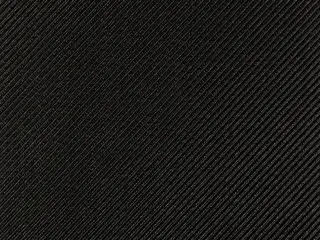
Natté is a basketweave at 3%, 5% and 10% in twelve two-tone colours, from Charcoal/Charcoal and Charcoal/Forest through Grey/Sable to Sable/White, and it is the one family where Mermet publishes an ultraviolet protection rating per colourway. Satiné is an offset twill at 1% and 5% in four charcoals, with a photograph of the reverse face for each, absorbing 87% to 95% of the solar energy that hits it. Both carry NFPA 701 TM#1, California Title 19 and CAN/ULC-S109, GREENGUARD Gold and RoHS lead free.
2 Mermet outdoor designs, 44 colourways

Inside the glass or outside it
Outside
A terrace, a balcony, a pool deck or a hard west wall, on an outdoor shade running in side tracks. The fabric takes the sun before any of it reaches the glass, which is the only way to make a west-facing lanai usable in August. Natté at 5% or 10% is the usual call, so the breeze still moves through.
Inside
Both fabrics are also interior screens, and Satiné at 1% is a serious glare fabric: charcoal, dense and heavy, with a diagonal twill line that reads as a textile rather than a technical weave. On a tall interior window the extra weight hangs flat, which is the reason to pay for a reinforced core indoors.
UV and UPF
Mermet publishes UV blockage of about 97% for Natté at 3%, 95% at 5% and 90% at 10%, and 99% for Satiné at 1% and 95% at 5%. Natté also carries an ultraviolet protection rating per colourway, Excellent or Very Good across most of the card, which the table on the design page shows colour by colour.
Colour outdoors
Both cards are dark, and deliberately: on an exterior shade a charcoal or grey face keeps the view out through the weave and hides the dust that a coastal wind carries. Sable/White and Grey/Grey are the light end of Natté if the building has to read pale from the street.
Specifying an exterior shade in South Florida
Wind is the constraint, not sun. An exterior roller on an open terrace in Fort Lauderdale or Sunny Isles has to run in side tracks and has to have a wind sensor or a scheduled retract, and the width of the opening usually decides whether it is one shade or two. We measure the structure the shade will hang from as carefully as the opening: an exterior shade puts real load on a soffit or a fascia, and a fixing that is fine for an interior roller is not enough here.
Salt and rain decide the maintenance. These weaves clean with mild soapy water and a soft sponge, and the shade should be left down until it is completely dry rather than rolled up wet. On a screened terrace or under a deep overhang, an interior-rated screen is often enough and costs less; where the sun reaches the glass directly, the exterior fabric is what changes the room. Our outdoor shades page covers the systems we install them on.
Outdoor on our installations
Terraces, pool decks and west-facing lanais from Fort Lauderdale to Golden Beach are where these two go, usually on a motorized exterior roller in side tracks with the fabric in a charcoal or grey. Indoors we reach for Satiné 1% when a tall window needs a heavy, dark, glare-killing screen that still hangs perfectly flat. Both are cut and finished in our own workroom, and we specify the track, the wind strategy and the fixing at the same time as the cloth.
Outdoor: frequently asked
Can Natté and Satiné be used indoors?
Yes. Mermet rates both for exterior and interior use, and they behave indoors like a heavy, dense solar screen. Satiné at 1% is the densest charcoal screen in the Mermet library, and the extra weight of a reinforced core is an advantage on a tall interior window where a lighter cloth can move.
Which openness for a terrace?
Natté at 5% or 10% on an open terrace, so air still moves through and the shade takes less wind load; 3% where the terrace faces west and the sun is the whole problem. Satiné at 5% where the same terrace wants a darker, twilled look. On glass rather than on an opening, the tighter weaves make more sense.
How wide can an outdoor shade be?
Both fabrics come 122 inches wide, so a single exterior shade is limited to that, less the track allowance. Wider openings are covered by two shades side by side on a common fascia, and on a windy elevation two narrower shades are the better engineering answer anyway.
Are these fabrics fire rated?
Both carry NFPA 701 TM#1, California Title 19 and CAN/ULC-S109, plus GREENGUARD Gold and RoHS lead free, with bacterial and fungal resistance tested to ASTM E2180 and ASTM G21. That covers the requirements a Florida condo association or a commercial project normally puts on an exterior shade fabric.
What does reinforced core mean?
Mermet's name for the construction: 42% fiberglass and 58% vinyl, more fiberglass than the 36% in E Screen or T Screen, in a heavier cloth. That is what lets the same fabric hang outside on a terrace and stay dimensionally stable in heat, humidity and salt air.
Mermet outdoor in Fort Lauderdale, Miami, Boca Raton & Palm Beach
Every fabric on this page is sourced directly from Mermet, cut and finished in our Fort Lauderdale workroom on Lutron, Somfy, Crestron or manual hardware, and installed by our own team from Miami to Palm Beach. Our showrooms in Fort Lauderdale (4539 Powerline Rd, by appointment) and Miami Beach (500 South Pointe Dr #150) have motorized shades running so you can judge the fabrics in motion.
Choose the fabric in your own light
Book a complimentary in-home consultation. Shortlist the designs you like and we bring the Mermet sample books, demo motors, and honest answers about openness, colour and exposure.