Window Treatment Trends 2026: 12 Trends We Are Installing in South Florida

Twelve trends, each shown in a real Exotic Shades & Draperies install with the fabric and the motor named, plus what is out, style ideas by interior and the published prices.

★★★★★Rated 5.0 · 122 reviews Fort Lauderdale · 35 Miami Beach · Lutron Certified Dealer · Updated September 2026
Trends and Style Ideas · 2026

What we are installing this year, and why

Written from the fabric schedules of our own installs, Sunny Isles to Southwest Ranches and one residence over Central Park: a trend earns its place here when it shows up on more than one job and solves something South Florida glass actually does.

The short version

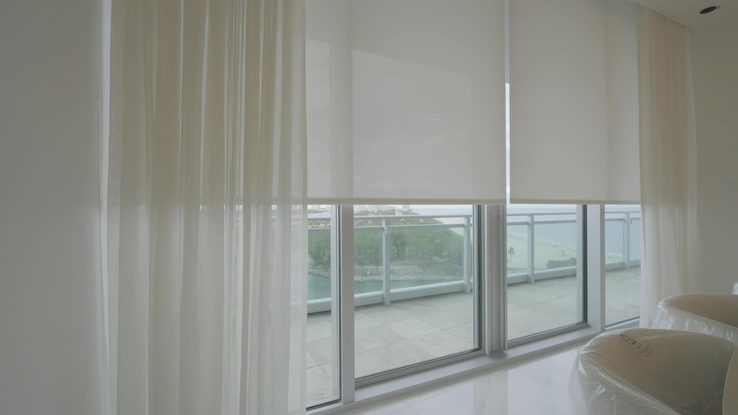
  • The big one: layers: a sheer for the day, a solar screen for the glare, a blackout for sleep, in the same opening, each on its own motor.
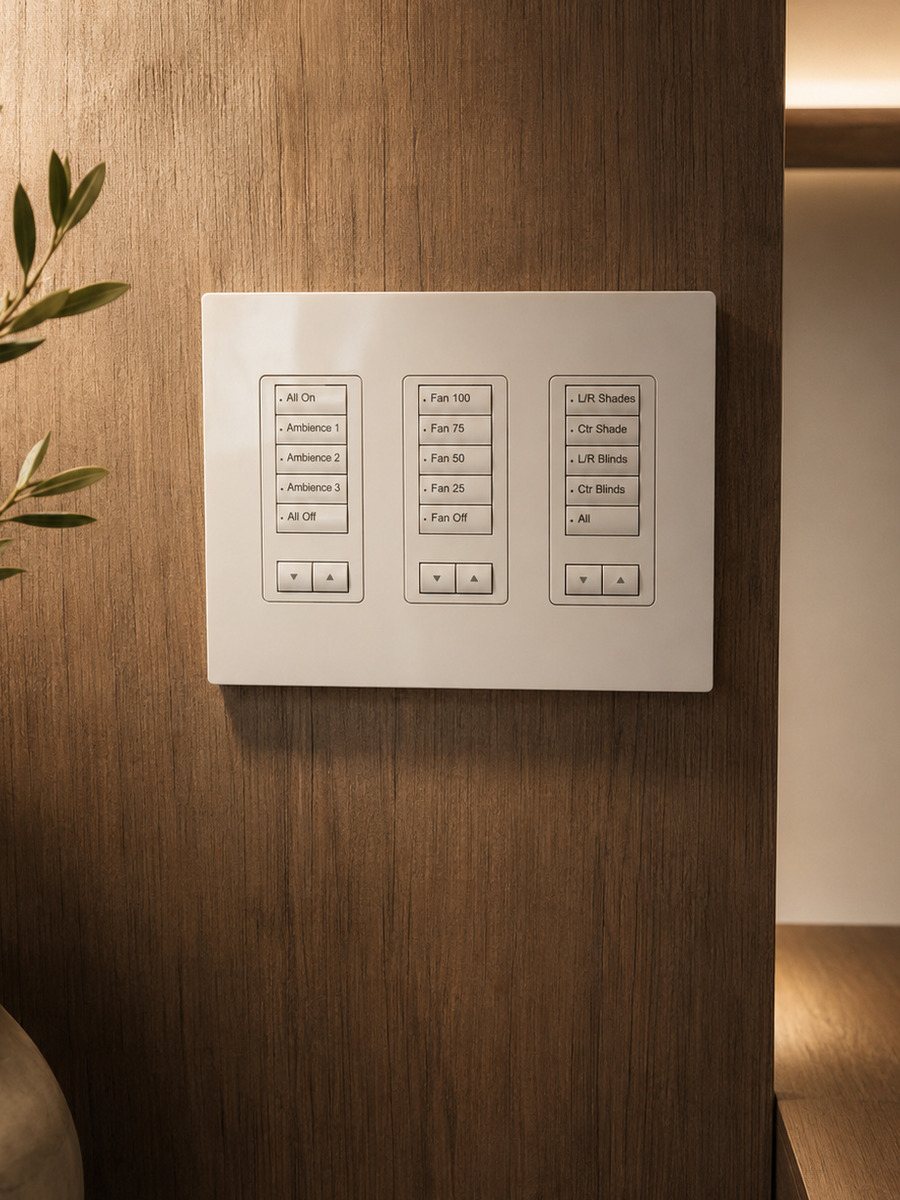
  • Control: motorized by default on big glass, and run from the wall keypad, the phone and voice rather than a drawer of remotes.
  • Hardware: either it disappears into a ceiling pocket or a wood valance, or it is chosen as a finish: decorative rods, hand-finished Palladiom, a black architectural fascia.
  • Color: warm neutrals - alabaster, parchment, limestone, chalk - are replacing cool grey on the drapery and light-filtering layers; white stays on ocean-facing screens.
  • Fabric: real linen and cotton-linen sheers, chenille, wool blends and velvet; texture is doing the work pattern used to do.
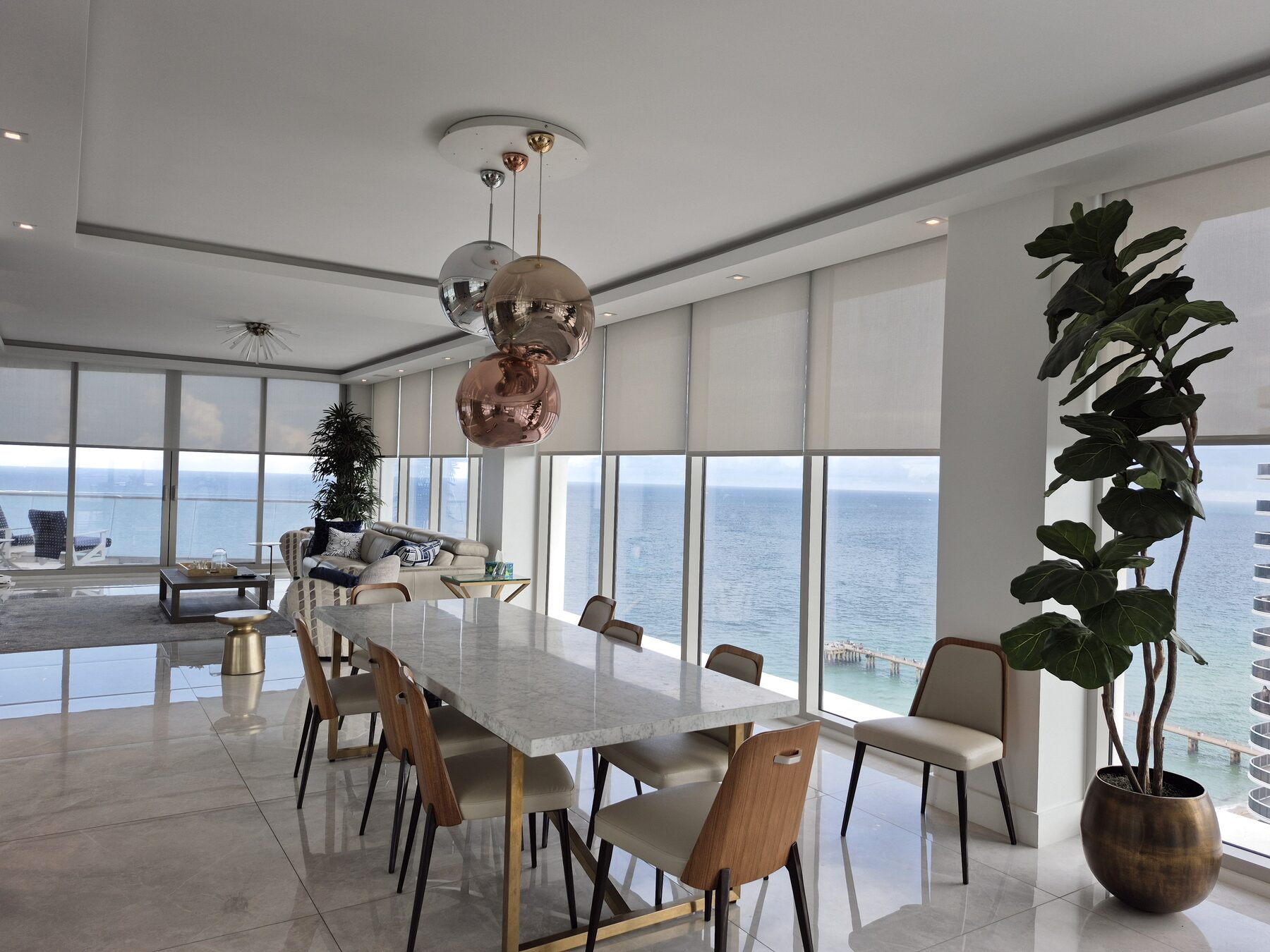
  • Sun: solar screens tuned to each exposure, 3% where the sun hits straight on and 5% where the view matters, instead of one fabric everywhere.
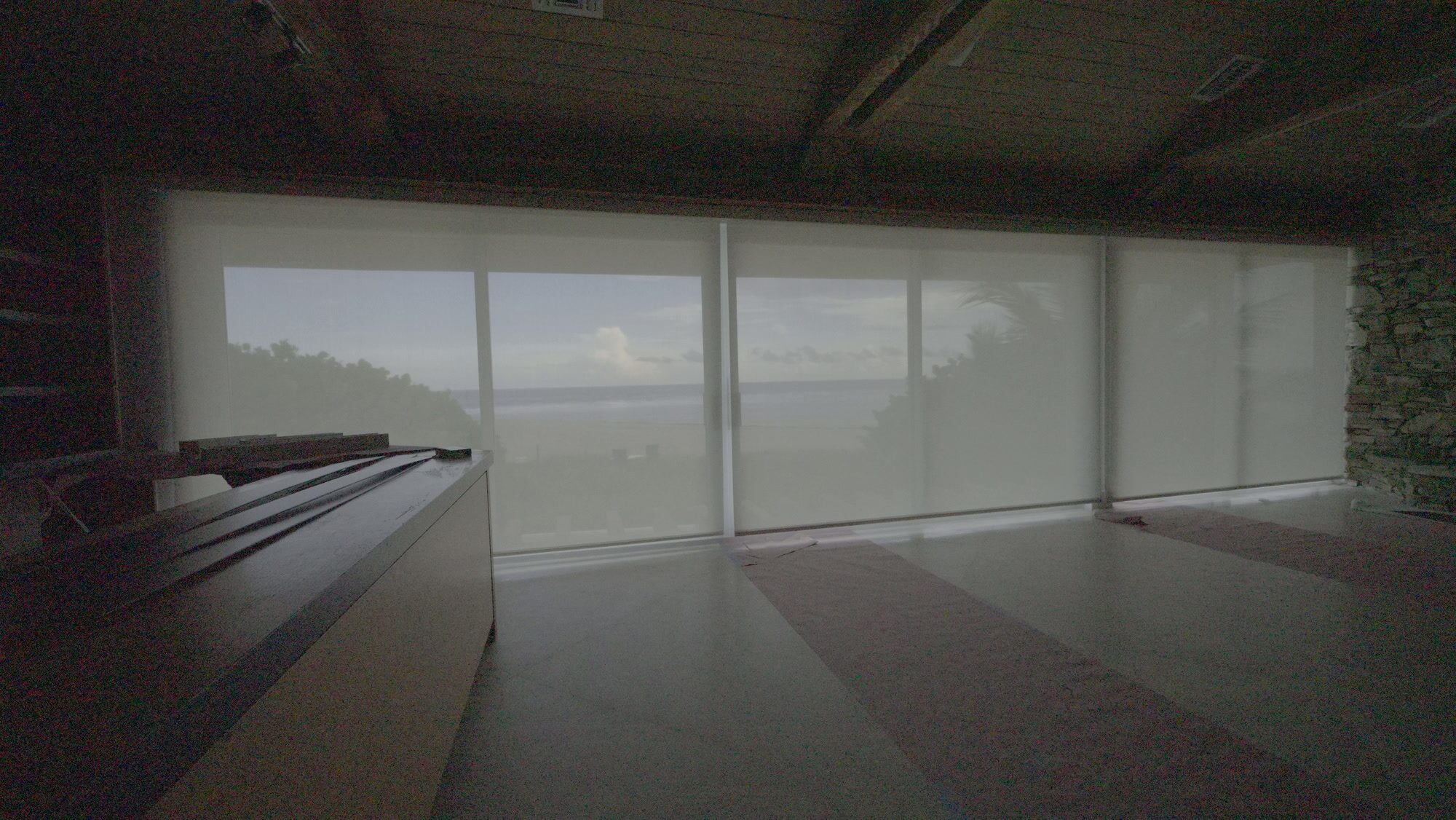
  • Dark: blackout treated as a system: side channels, a sealed top, caulking, and drapery on bent tracks where a roller cannot get there.
  • Scale: walls of glass handled as one gesture: coupled rollers on one motor, synchronized runs, 2.5 in tubes on 147 in shades, sheers to 16 ft.
At a Glance

The twelve trends on one table

What each trend replaces, where it belongs, the install that shows it and what it does to the budget. Prices are our published figures, budgetary and before tax.

TrendWhat it replacesWhere it belongsSeen atCost signal
1. LayersOne fabric asked to do three jobsFloor-to-ceiling glass, bedrooms on the waterRitz-Carlton Sunny IslesOne motorized shade per layer; sheers from $85 per ft of track
2. On the house systemA drawer of remotesEvery motorized home; battery motors in condosLandmark Ranch Estates, Hillsboro Mile$733 to $3,141 per 72 x 84 in roller by motor system
3. Recessed pocketsCassettes and surface fasciasNew construction and gut renovationsTrump Tower III, LandmarkFramed by the builder at drywall stage; the shade prices by size and motor
4. Warm neutralsCool grey, stark white on every layerDrapery and light-filtering layersBay Drive, The HemispheresNo premium; a fabric choice
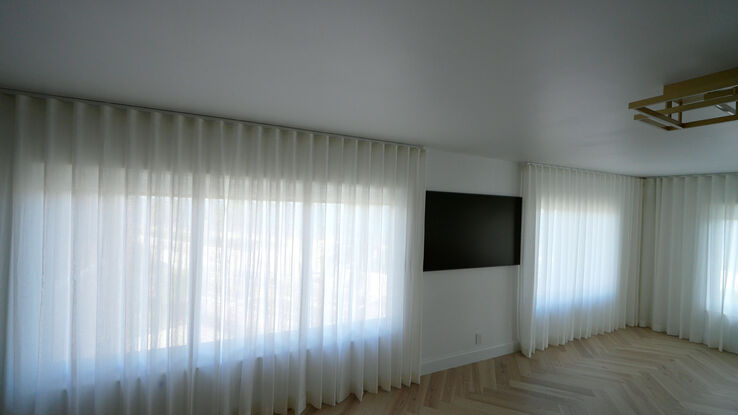
5. Real linen sheersPolyester voile, ready-made lengthsLiving rooms and bedrooms on glassOceanfront condo, Boca Raton$85 per ft in a house, $95 in a condo, manual track
6. TexturePrints and flat plainsDraperies, Romans, theatresFasano Fifth Avenue, LandmarkSet by the fabric house; interlining adds
7. Screens by exposureOne 5% screen everywhereEvery elevation that takes sunSalato, Pompano BeachSame price, different weave
8. Blackout systemA blackout fabric on its ownBedrooms, nurseries, media roomsLuxury Home Boca Raton, TurnberryChannels, caulking or a bent track added per window
9. Wood valancesA row of cassettesCondos with no depth; drapery topsThe HemispheresMillwork per opening, quoted with the shade
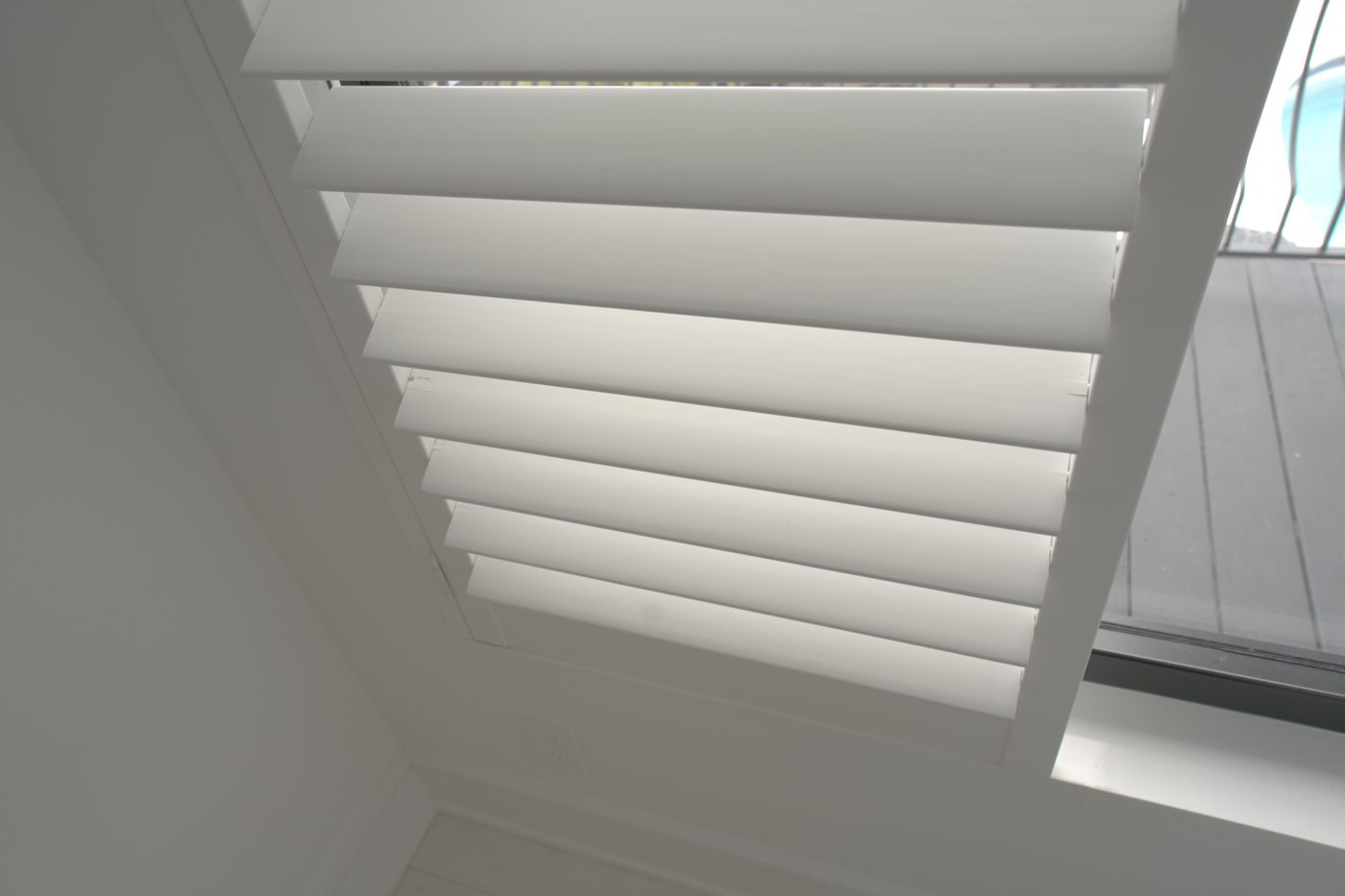
10. Romans and shuttersA roller on every windowBaths, closets, kitchens, guest housesGolf Course Home Boca, LandmarkShutters $25 to $45 per sq ft installed
11. Hardware as finishHidden hardware, plain cassettesTraditional rooms, French doorsFasano Fifth Avenue, Fort Lauderdale estateHardware chosen as a finish, quoted per window
12. One lineWindows treated one at a timeSliders, walls of glass over 144 inBay Drive, SalatoCoupled shades priced as two; 2.5 in tubes on wide openings
Style Ideas by Interior

The same trends, six different houses

Trends are not a look; they are a set of decisions that land differently in a glass tower and a Mediterranean revival. Six recipes built from what is on this page, each from products and fabrics we have installed.

Modern coastal

Boca Raton, Fort Lauderdale and Palm Beach waterfront homes

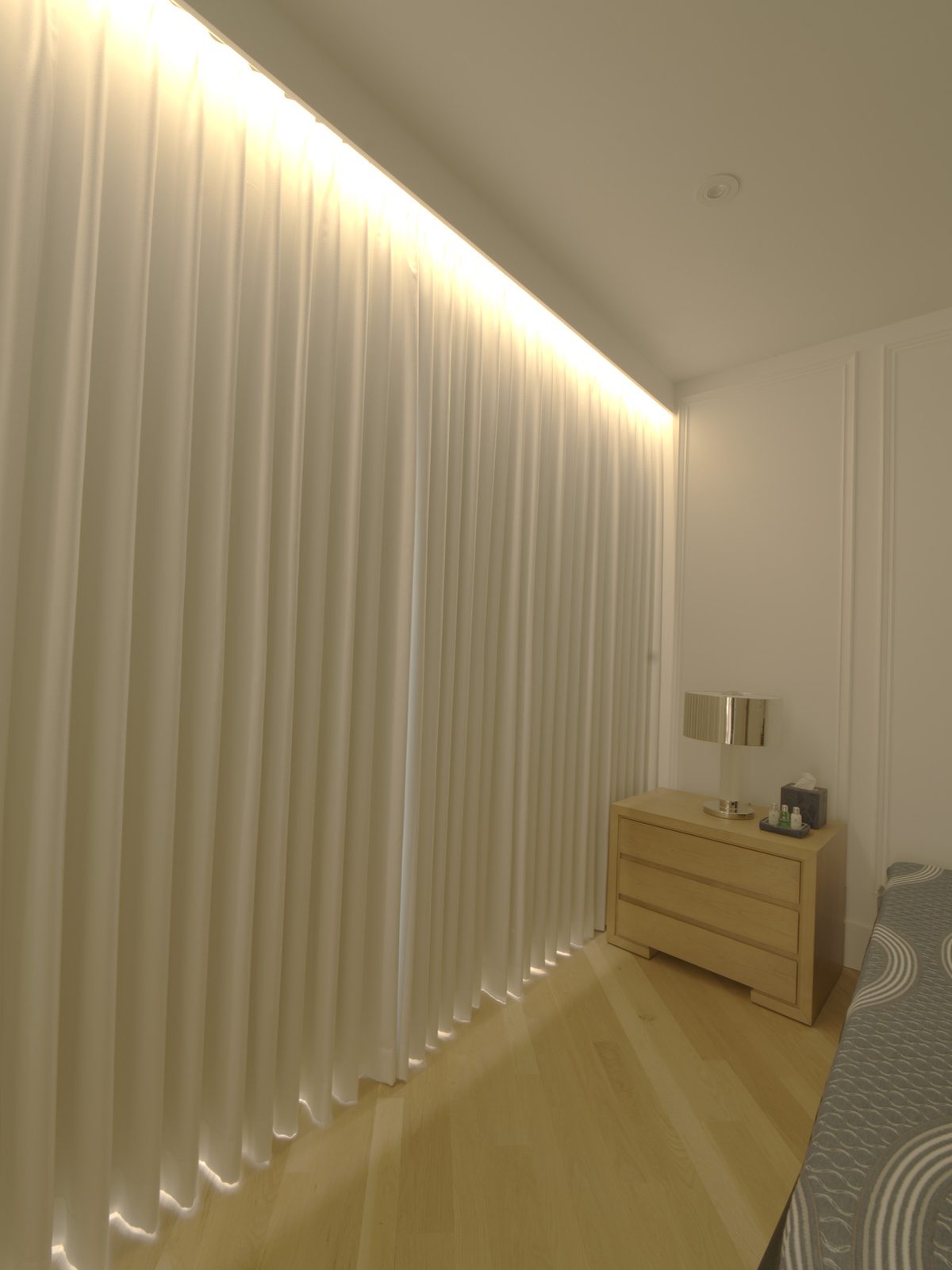
Cotton-linen or linen sheers at 120% fullness on a recessed or ceiling-mounted track, a 3% or 5% screen in a warm white behind them, blackout rollers in side channels in the bedrooms, wood or lacquered valances where a track has to be hidden. Palette: chalk, alabaster, sand. The Boca Raton oceanfront condo is the model.

The glass tower

Sunny Isles, Brickell, Miami Beach and Hallandale condos

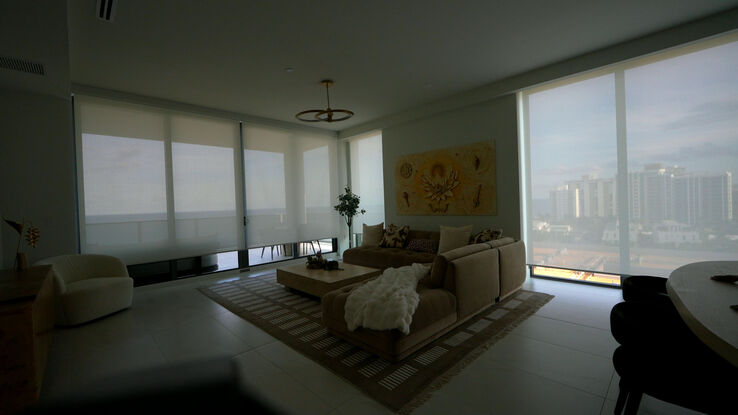
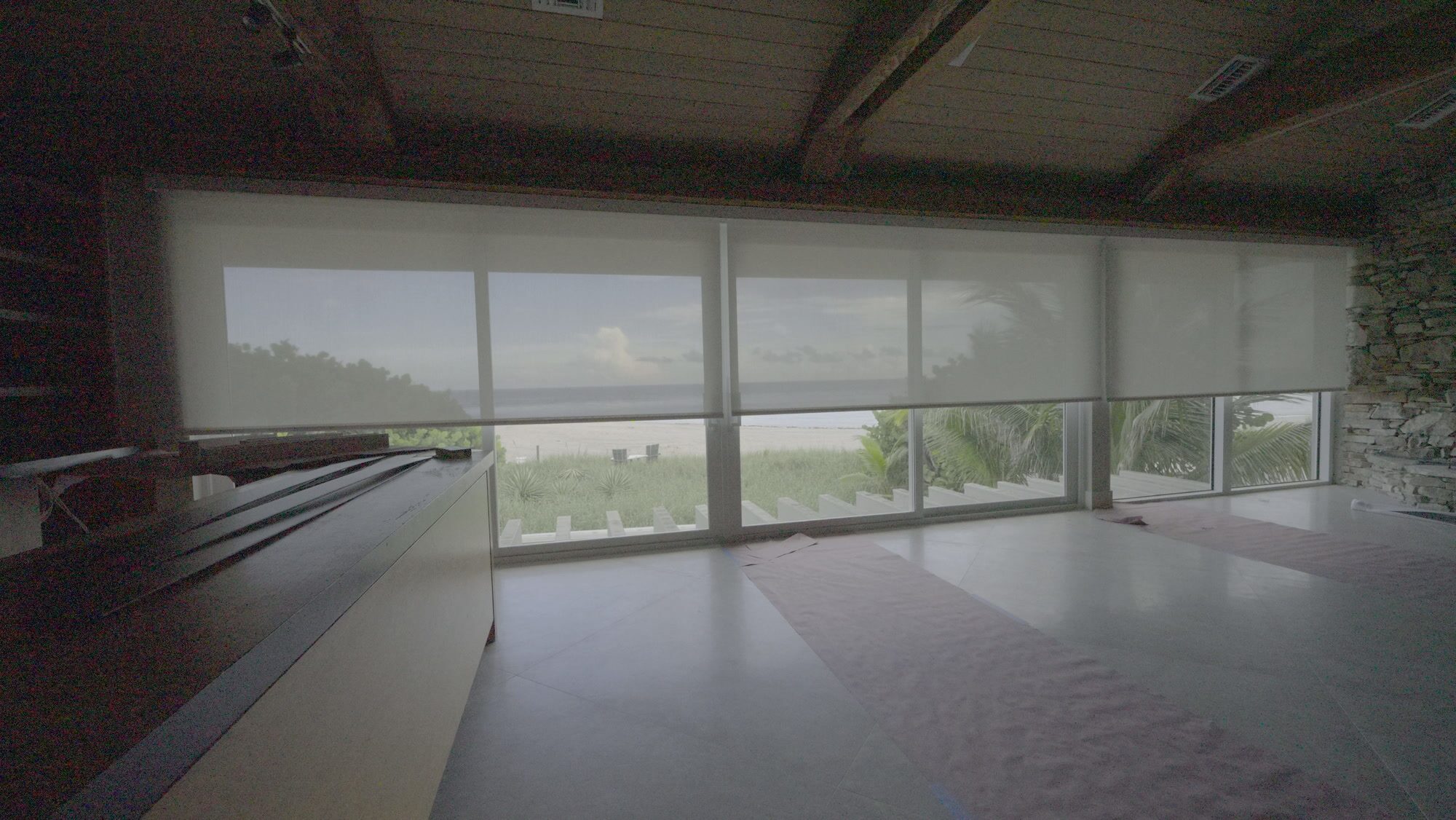
Rollers in E Screen White/White on the ocean side, recessed where the building allows and behind a slim fascia or a basswood valance where it does not; sheers wall to wall on a motorized track in the primary suite; a dual roller where the bedroom has no wall for a track; Somfy WireFree battery motors on TaHoma where the association bars wiring, and Sonesse 30 Zigbee motors on a wired 24 V DC run where it allows one, since Zigbee is the radio, not the power. Turnberry, Trump Tower III and The Hemispheres show the three answers.

Mediterranean revival

Coral Gables, Palm Beach and the older Fort Lauderdale neighborhoods

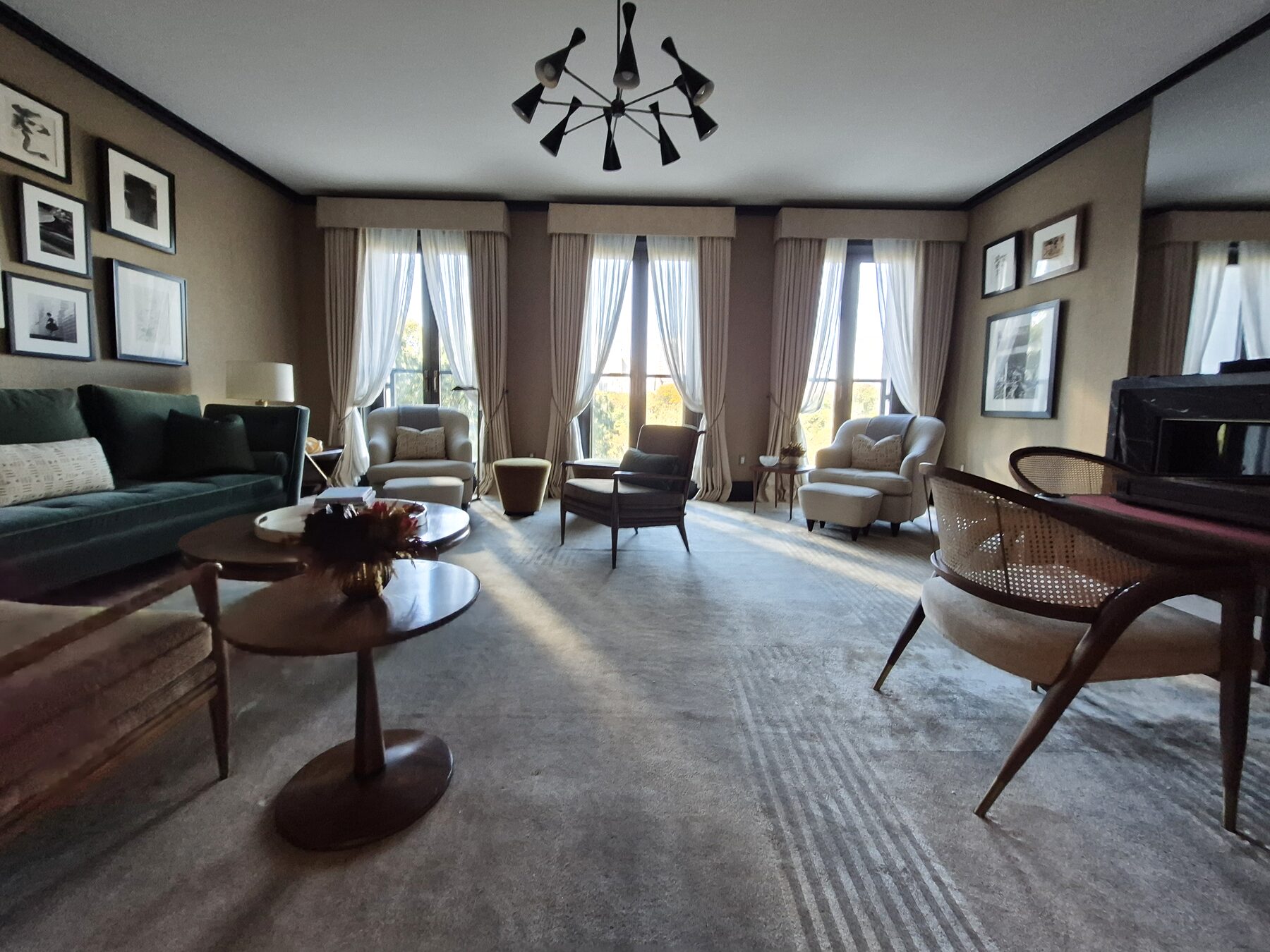
Pinch pleat in a chenille or a wool blend on decorative rods, drawn by hand, with motorized blackout hidden behind for the bedrooms; flat Romans in linen for the deep-set windows; lacquered basswood shutters with 3 1/2 in louvers and a hidden tilt for the courtyard rooms; charcoal screens on the loggia glass so the garden stays sharp. Warm parchment and limestone rather than white.

Mid-century and MiMo

Miami Modern condos and 1950s waterfront houses

Keep the lines: an 80% ripplefold for a shallow contemporary wave, charcoal 3% screens for the sharpest view, a black architectural fascia with a designer bottom bar on inside-mounted rollers, Allusion sheer verticals or a panel track on the slider you walk through all day, and plain textured plains, no prints.

Classic and traditional

Formal rooms, French doors and estates

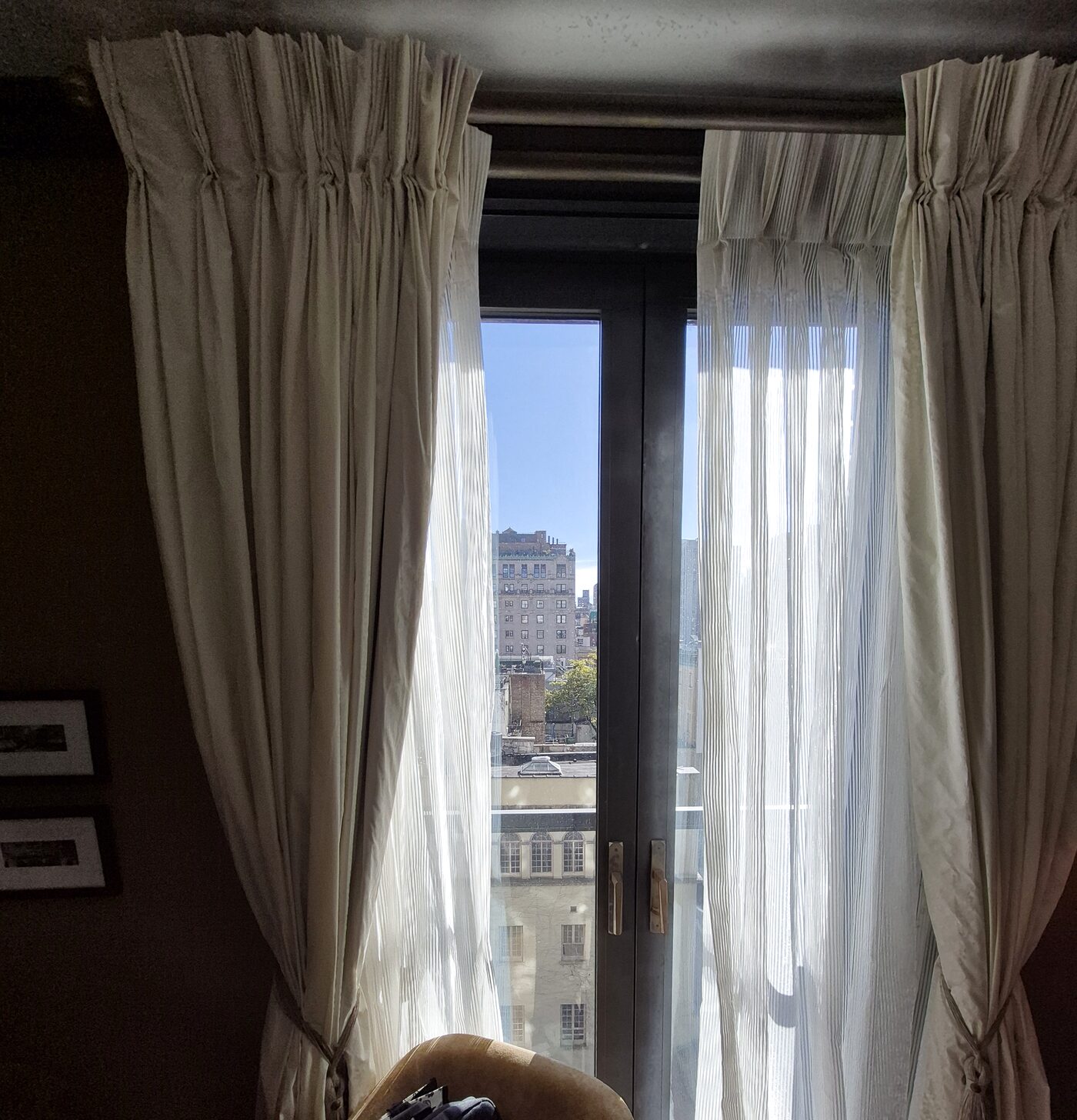
Interlined draperies in chenille, wool or velvet on decorative rods or Palladiom tracks, hobbled or flat Romans in the study and the baths, custom cornices over the drapery, sheers behind the panels, and blackout as a system in every sleeping room. The Fasano residence over Central Park and the Fort Lauderdale oceanfront estate are the references.

The new-construction estate

Southwest Ranches, Parkland, Boca Raton and Pinecrest builds

Everything designed in before the drywall: pockets for every roller, track and Roman, one shielded Cat 6 plus one 16-2 low-voltage cable to each shade, coupled rollers on one motor across the long elevations, sheers to 16 ft flush to the floor, a Lutron keypad in every room and not one remote in the house. Landmark Ranch Estates, from measuring day to programming.

South Florida Specifics

What the trend lists written elsewhere leave out

The national trend pages are written for double-hung windows in a temperate climate. Six things about South Florida glass that change which trend applies and how it is built.

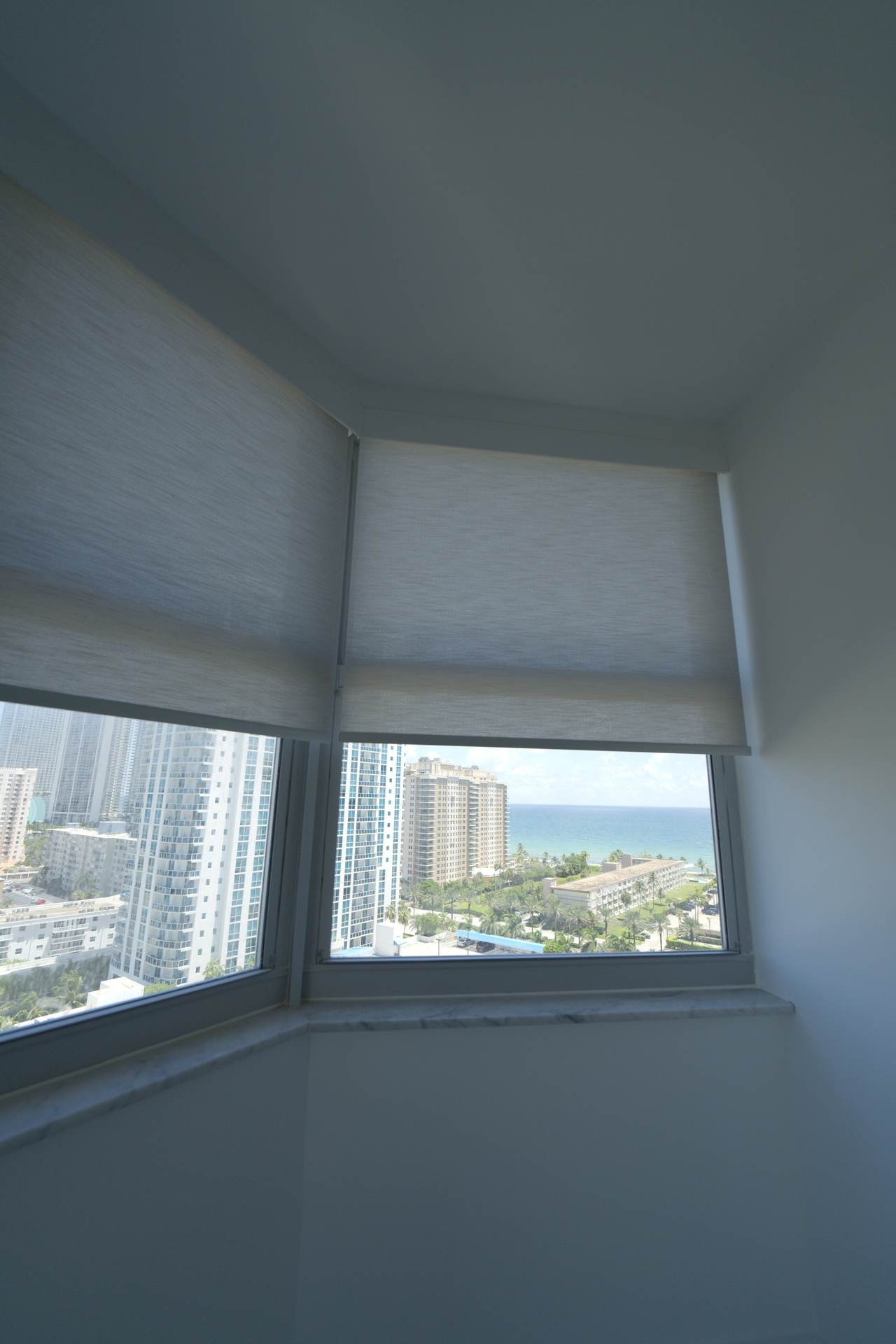
Two roller shades meeting at an angled corner under the lacquered basswood valance at The Hemispheres, Hallandale Beach, halfway down over the ocean view
The Hemispheres: 2.5 in of clearance above the glass, a 110 in shade on a reinforced tube, a basswood valance made to the opening. Case study.

West and south sun

A 3% screen where the sun hits straight on, charcoal where the view matters most, and a lining generous enough that a linen Roman does not fade. Honeycomb shades are the one soft treatment with a published insulation value, R 3.5 to 4.4, which is why they go in west-facing bedrooms behind the shutters or the drapery.

Sliding glass walls

Sliding doors are most of what we cover in condos and waterfront homes. The treatment has to clear the handle, stack on the fixed side and cover a span that is one measurement, not two windows: motorized rollers coupled over 144 in, sheers on a track wall to wall, Allusion sheer verticals or a panel track for the door you walk through all day, bypass shutters where the house is traditional.

Humidity and salt air

Composite shutters in baths, kitchens and oceanfront rooms, hardwood where the room is formal; woven woods in conditioned rooms and a fabric Roman in the bath; performance and EasyClean chenilles on the drapery; linen cut to the shortest measurement and steamed in place because it moves; coastal-rated hardware and Somfy exterior motors on the terrace screens.

Impact glass and concrete

Many South Florida frames are about 3 in deep and the slab above is concrete: a Somfy Sonesse 30 tube tucks inside a 3 in frame, a Lutron Roller 64 sits proud unless it is pocketed or outside-mounted, and brackets go into block with specialty fasteners. On a new build the pocket is framed before the drywall; on an existing ceiling a soffit or a valance does the job.

Condo rules

Battery motors mean no wiring, no opened walls and no construction approval in most buildings; a new condo comes with empty conduit and a pull line, which a wired job has to map before the first shade goes up; exterior screen colors are confirmed with the association first. Zigbee and RTS are radio protocols, not a power source: a WireFree RTS battery motor on a TaHoma gives app and voice control without touching the building's wiring, while the Sonesse 30 Zigbee we install runs on wired 24 V DC, as at Bay Drive and The Hemispheres.

Ceilings at 10 to 12 ft

Ready-made lengths stop at 120 in. Custom sheers are cut to the room, at 120% fullness on oceanfront glass, and a 16 ft panel is dressed and hung differently from an 8 ft one. Measure from the track to the floor at both ends and the middle; floors are rarely level over 20 ft of glass.

What Is Out

Eight things we would skip in 2026

Not because they are ugly, but because each one is a compromise we end up replacing. The installer's list, not the showroom's.

Grey on grey

Cool grey draperies and grey light-filtering fabrics read cold against South Florida light and the wood, stone and linen now in the rooms. Warm off-whites and sand tones have replaced them on our fabric schedules; grey survives as charcoal on the screen layer, where it disappears in front of the view.

One fabric on every exposure

A 5% screen on the side of the building that takes the sun straight on is a compromise; a 3% on the shaded ocean side is a darker room than it needs to be. Salato ran 3% and 5% in the same unit for that reason.

A blackout fabric without the system

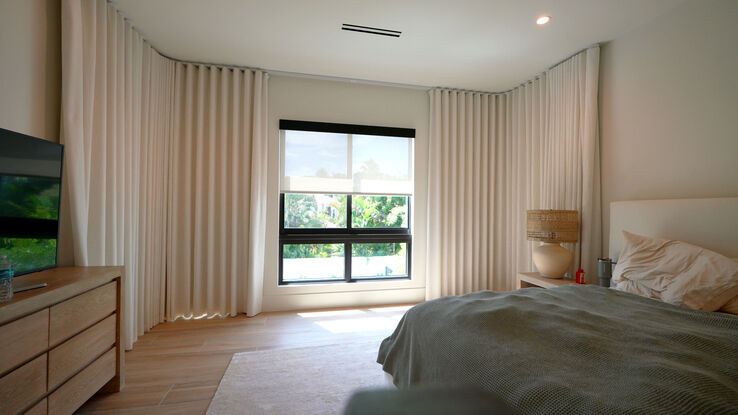
An opaque roller inside the frame leaves a halo of light at every edge. If the room has to sleep dark it gets channels, a sealed top, a hembar and caulking, or blackout drapery with returns, or it does not get called blackout.

A drawer full of remotes

One remote per room was the 2015 answer. In 2026 the shades join the scenes: a keypad, an app, a voice assistant, and the terrace screens on the same press as the living room.

Ready-made lengths on a 10 ft ceiling

A packet length stops short and the rod sits on the frame. Custom panels are measured from the track to the floor and cut to the room; on a wall of glass the track goes at the ceiling.

Dated PVC verticals on the slider

Old PVC verticals read as dated the moment the rest of the room is done. Allusion sheer verticals, a panel track, motorized rollers or sheers on a track cover the same door without the clatter.

Surface hardware in a new build

If the drywall is still open, the pocket is a framing detail and the wiring is a cable pull, and both are cheapest before the ceiling closes. Cassettes on the ceiling of a house that is still being built are a missed opportunity, not a style.

Fabric on the floor where people walk

A 3 to 6 in puddle belongs to a stationary silk or velvet panel where nobody walks. Panels that move every day float 1/2 in off the floor; stationary ones break 1 to 2 in. Linen that touches the floor breaks and goes back to the workroom.

What It Costs

The published figures behind the trends

Trend pages usually say "affordable" and stop. These are our own quote-engine figures, September 2026, budgetary and before tax; the instant price tool and the track calculator turn your sizes into a range without an email.

One motorized roller shade, 72 x 84 in

about $733 on our Essential tier, $793 on Somfy WireFree, $1,910 on wired Somfy and $3,141 on Lutron, fabric and motor included, budgetary and before tax. A layered window is one of these per layer; a dual roller is roughly two sharing one fascia.

Custom sheers

$85 per linear foot of track width on a manual track in a house, $95 in a condo unit: a 20 ft glass wall is about $1,700 or $1,900. The track width is the number that sets the price; the fabric house sets the rest of the quote.

A motorized drapery track

a 12 ft track with a rechargeable motor, remote and installation is about $1,452 track only and about $2,833 with a smart-hub motor, ceiling mount and lined drapery, from the track calculator.

Plantation shutters

typically $25 to $45 per square foot installed, by material, louver size and shape; a blackout honeycomb behind the panels is priced as a shade.

Good to Know

Frequently asked

What are the window treatment trends for 2026?

Layered windows with a sheer, a solar screen and a blackout in one opening; motorization run from the house system, the phone and voice rather than a remote; hardware that either disappears into a ceiling pocket or a wood valance or is chosen as a finish; warm neutrals replacing cool grey; real linen and cotton-linen sheers; texture over pattern in chenille, wool blends and velvet; solar screens tuned to each exposure; blackout treated as a system with side channels and caulking; the return of Romans and shutters for secondary windows; and walls of glass handled as one coupled, synchronized line. Every one of these is on a page of this site as a real install, with the fabric and the motor named.

Are grey window treatments out of style?

On the drapery and light-filtering layers, largely yes: our recent fabric schedules run to Alabaster, Parchment, Limestone, Chalk and White/Linen, warm off-whites that sit with wood, stone and linen. Grey survives as charcoal on the solar-screen layer, because a dark weave gives the sharpest view through the fabric, and white stays on ocean-facing screens where the room should be bright.

Are curtains out of style in 2026?

No. Sheers are our most requested drapery, and floor-to-ceiling linen or cotton-linen sheers on a motorized track are the most common thing we install on a wall of glass. What is out is the short ready-made panel on a rod at the frame: custom panels are measured from the track to the floor, hung at the ceiling, at 100% or 120% fullness, and cut to the room.

What is the most popular window treatment for sliding glass doors in South Florida?

Motorized roller or solar shades, normally coupled on one motor once the span passes 144 in, with sheers on a track wall to wall where the room wants softness; Allusion sheer verticals or a panel track for a door that is walked through all day; bypass shutters in a traditional house. Sliding doors are most of what we cover in condos and waterfront homes, and the treatment is sized to clear the handle and stack on the fixed side.

Are motorized shades worth it?

On big South Florida glass we motorize by default, because a 12 ft slider or a 10 ft sheer is not something to pull by hand twice a day and because the layers only work as scenes when each has its own motor. Published, one 72 x 84 in motorized roller runs about $733 on our Essential tier, $793 on Somfy WireFree, $1,910 on wired Somfy and $3,141 on Lutron, before tax. Battery motors suit condos and finished homes; wired motors suit new construction, where the cable is pulled at framing.

What color window treatments are trending in 2026?

Warm neutrals on the drapery and light-filtering layers: alabaster, parchment, limestone, chalk, gardenia, shell, white/linen and porcelain are the names on our recent schedules. On the screen layer, White/White for a bright ocean-facing room and charcoal for the sharpest view. Blackouts are usually white so they read as ceiling when they are up.

Are Roman shades still in style?

Yes, as the tailored soft layer on the secondary windows: baths, closets, kitchens, studies and children's rooms, in linen, wool blends and textured plains, flat-folded, lined in black where one has to black out and motorized where one covers a bedroom window. Landmark Ranch Estates has flat Romans through most of its baths and closets; six Turks and Caicos villas run custom Romans on Lutron's roman-shade kit from the keypads.

Are valances outdated?

The gathered fabric valance of the 1990s, yes. A custom wood valance made to the opening is back, in lacquered or painted basswood, because it hides the roller or the track, turns the hardware into millwork and solves the condo where there is no depth above the glass: at The Hemispheres a lacquered basswood valance made to each opening covers a roller that had about two and a half inches to live in, turning a 60-degree corner.

What window treatments work with floor-to-ceiling glass in a condo?

Motorized rollers in a solar screen, recessed into the ceiling where the building allows and behind a slim fascia or a wood valance where it does not; sheers on a motorized track wall to wall; a dual roller with a screen and a blackout on two tubes where the bedroom has no wall for a track; blackout in side channels where the room has to sleep dark. Battery motors on a hub give app and voice control without touching the building's wiring; a Zigbee motor still needs power, and the Sonesse 30 Zigbee runs on wired 24 V DC.

What is trending for bedrooms?

A sheer for the day and a blackout for the night in the same opening, and blackout treated as a system: side channels, a sealed top, a hembar and caulking at the edges, or blackout drapery with returns on a track. On angled or wraparound glass the answer is drapery on a bent motorized track that closes as one line around the corners and stacks clear of the glass by day, as in the Boca Raton home whose owners needed a completely dark room.

Are plantation shutters still in style in Florida?

Yes, and they are being specified more carefully: composite for baths, kitchens and oceanfront rooms, hardwood or lacquered basswood for formal rooms, wide louvers with a hidden tilt, and a blackout honeycomb behind the panels where a bedroom needs a dark morning, because louvers always let a little daylight find the edges. Typically $25 to $45 per square foot installed.

Do the trends change the price?

Some do not: a warm neutral costs what a grey costs, a 3% screen what a 5% costs, and a pocket in a house under construction is a framing detail. The trends that add cost add it per layer or per window: a second or third motorized layer, side channels and caulking for true blackout, a decorative rod or Palladiom bracket over standard hardware, a custom valance, a bent track. Our published pricing page and the instant price tool give the figures before we visit, and the quote you sign is the number you pay.

Every install named on this page has its own case-study page on this site with the full fabric schedule, the motors and the control system; the trends are drawn from those schedules and from our daily work in Fort Lauderdale, Miami Beach, Boca Raton and Palm Beach. Fabric figures are the suppliers' published data (Mermet E Screen transmittance, Lutron honeycomb R-values); prices are our published quote-engine figures, budgetary and before tax, September 2026. Written by David Martineau, owner of Exotic Shades & Draperies, Lutron certified dealer, Somfy Expert, Crestron and SDN certified. Updated September 13, 2026; this page keeps its address and is revised as the schedules change.


David MartineauOwner, Exotic Shades & Draperies · Lutron · Crestron · Somfy Expert · SDN Specialist Certified · About the workroom

See the trends in fabric, not on a screen

Book a private, complimentary consultation in Fort Lauderdale or Miami Beach, or at your home: we bring the linen, the chenille, the screens and the blackout, show you each layer at your own glass, and the quote you sign is the number you pay. Start with the free guide: the 5 costly mistakes.

Call 954-881-9331Book a Free Consultation