

Mermet Solar Screen Fabrics
304 colourways in 11 designs. Glare control with the view kept: the weave that makes a wall of South Florida glass liveable.
Keep the water, lose the glare
A solar screen is a woven fabric with a measured openness that you can see through. It stops most of the sun's heat and glare at the glass while the horizon, the pool and the boats stay readable through the weave. Mermet's screen range runs to 304 colourways in 11 designs: the vinyl-coated fiberglass weaves that do most of the work here, E Screen at 0.5%, 1%, 3%, 5% and 10%, M Screen at 1%, 3% and 5%, T Screen at 1% and 3%, S Screen at 1% and 4% with Naturals at 5%, the three Deco cards, the reinforced-core Natté and Satiné that are also rated for outdoors, and the PVC-free GreenScreen knits.
Every design page shows each colourway with its openness and Mermet's published figures: Tv (visible light transmitted), Ts (solar energy transmitted), Rs (solar energy reflected) and As (absorbed), plus the solar heat gain coefficient with the fabric inside or outside residential double glazing. Those numbers and the colour decide how the room behind the shade feels. In the E Screen card, White/White reflects 78% of the solar energy that reaches it and absorbs 9%; Charcoal/Charcoal absorbs 96% and reflects 4%. We read the same table when we recommend a fabric for a particular exposure, and the KOOLBLACK charcoals are what break the rule.
11 Mermet solar screen designs, 304 colourways
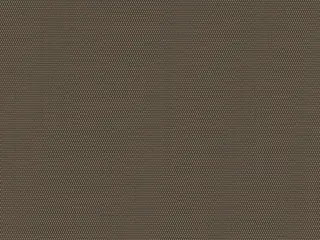
E Screen
The reference solar screen, in every openness Mermet weaves
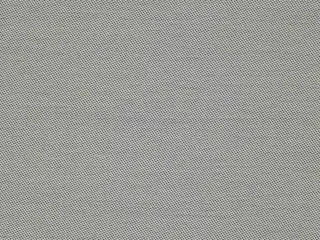
T Screen
A reversible satin screen with a different colour on each face

M Screen
The rib weave, in the warmest neutral card Mermet makes
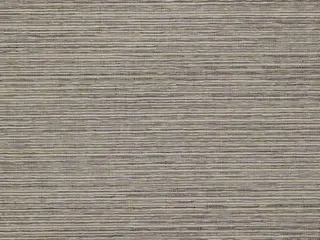
S Screen
A wrapped-yarn screen with the hand of a natural textile
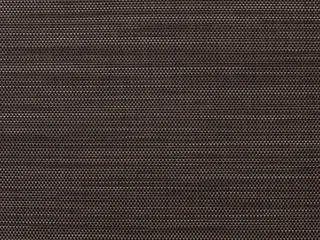
E Screen Deco
The E Screen basketweave, woven in bicolour yarn
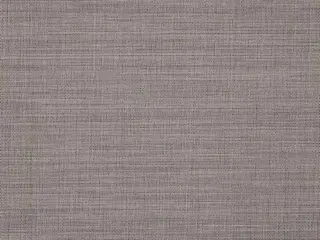
M Screen Deco
The rib weave in seven stone and earth tones
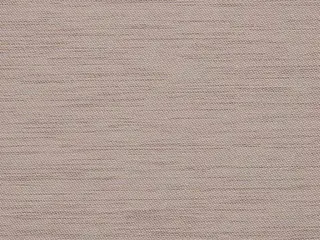
T Screen Deco
A satin screen in coffee tones with a white street side
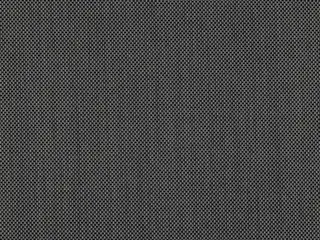
Natté
A reinforced-core basketweave rated for outside the glass
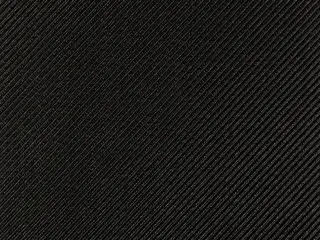
Satiné
The dense twill of the reinforced-core pair, in four charcoals
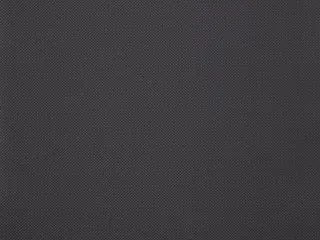
GreenScreen Evolve
A PVC-free 3% screen woven from recycled polyester
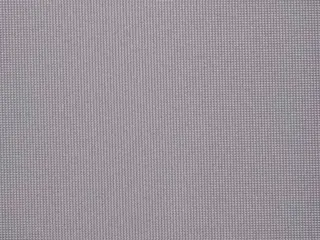
GreenScreen Revive
The lightest screen in the library, at 1% and 5%
How we choose the openness in South Florida
0.5% and 1%
Hard west and south-west glass, rooms with a television or monitors facing the window, and anywhere glare is the complaint. E Screen is the only Mermet line woven at 0.5%, and it comes 122 inches wide in that weave. At 1% a light colour softens the view; a charcoal keeps it sharp and takes the heat instead.
3%
The default on the water. The horizon stays readable, glare is under control and heat gain drops sharply. E Screen, T Screen, M Screen, E Screen Deco, T Screen Deco, M Screen Deco, Natté and GreenScreen Evolve are all woven at 3%, which makes it the easiest openness to match across a whole building.
4% and 5%
View rooms under a terrace, filtered exposures and living rooms where the water is meant to be the picture. E Screen, M Screen, T Screen Deco, M Screen Deco, S Screen at 4%, S Screen Naturals, Natté, Satiné and GreenScreen Revive all sit here. The ocean side at Salato in Pompano Beach is E Screen 5%.
10%
North elevations and shaded glass where the view is the whole point. E Screen and Natté are the two Mermet lines woven at 10%, and UV blockage drops to about 90% there against 99.5% at 0.5%. Never on a west wall, where an open weave simply hands the glare to the room.
One colour, several weaves
E Screen offers all five openness factors in the same eleven colours, and M Screen three in thirteen. That is how a whole floor is handled: the hot elevations get the tighter weave, the shaded ones the more open weave, and the building still reads as one fabric. Our openness guide walks through it.
Light colour or dark colour?
Dark weaves give the clearest view and absorb the heat: in the E Screen card Charcoal/Charcoal absorbs 96% of the solar energy that reaches it, and Satiné, woven only in charcoals, absorbs 87% to 95%. Light weaves reflect the heat and haze the view: E Screen White/White reflects 78%, T Screen White/White 76%, M Screen White/White 76%. On glass that already runs hot, a light or two-tone weave keeps more of the heat outside; where glare and view clarity are the whole brief, a dark weave wins and the room takes a little more warmth, unless it is a KOOLBLACK charcoal, which is the one dark weave that reflects.
Two-tone weaves let the inside and the outside be decided separately, which matters in a condo where the association governs how the building reads from the street. T Screen is the clearest case: a reversible satin whose card runs both ways, Charcoal/White and White/Charcoal, with a photograph of the reverse face for every colour. T Screen Deco puts a white street side behind five coffee tones. Whatever the colour, a solar screen gives no privacy at night: with the lights on inside and dark outside, it silhouettes. That is what a blackout or a light-filtering layer behind it is for, usually on a dual roller.
Compare the solar screen designs
| Design | Colourways | Openness | Max width | Composition | PVC-free | NFPA 701 | KOOLBLACK | Outdoor |
|---|---|---|---|---|---|---|---|---|
| E Screen | 83 | 0.5%, 1%, 3%, 5%, 10% | 122 in | 36% fiberglass / 64% vinyl | No | Yes | Yes | Indoor |
| T Screen | 34 | 1%, 3% | 122 in | 36% fiberglass / 64% vinyl | No | Yes | Yes | Indoor |
| M Screen | 39 | 1%, 3%, 5% | 122 in | 36% fiberglass / 64% vinyl | No | Yes | No | Indoor |
| S Screen | 30 | 1%, 4%, 5% | 122 in | 33.6% fiberglass / 59.6% vinyl | No | Yes | No | Indoor |
| E Screen Deco | 20 | 1%, 3% | 122 in | 36% fiberglass / 64% vinyl | No | Yes | No | Indoor |
| M Screen Deco | 14 | 3%, 5% | 98 in | 36% fiberglass / 64% vinyl | No | Yes | No | Indoor |
| T Screen Deco | 15 | 1%, 3%, 5% | 122 in | 36% fiberglass / 64% vinyl | No | Yes | No | Indoor |
| Natté | 36 | 3%, 5%, 10% | 122 in | 42% fiberglass / 58% vinyl | No | Yes | No | Yes |
| Satiné | 8 | 1%, 5% | 122 in | 42% fiberglass / 58% vinyl | No | Yes | No | Yes |
| GreenScreen Evolve | 9 | 3% | 118 in | 100% polyester / 78% recycled content | Yes | Yes | No | Indoor |
| GreenScreen Revive | 16 | 1%, 5% | 118 in | 100% polyester / 89% recycled content | Yes | Yes | No | Indoor |
Solar screens on our installations
On an ocean or Intracoastal wall in Fort Lauderdale, Hallandale or Sunny Isles we usually land on 3% or 5%: the horizon still reads through the weave, the glare off a white sofa is gone and the room stops heating by mid-afternoon. Turnberry Ocean Club runs E Screen 5% White/Linen, Salato in Pompano Beach 3% on the side exposure and 5% on the ocean, Trump Tower III 5% White/White, and the Ritz-Carlton Residences in Sunny Isles T Screen 3% White. West glass gets 1% or a KOOLBLACK charcoal.
Solar screens: frequently asked
Which Mermet solar screen should I start with?
E Screen, in 3% or 5% for a view room and 1% for hard west glass. It is the line with the widest openness range, eleven two-tone colours from White/White to Charcoal/Charcoal, rolls to 122 inches and a full set of fire listings, and it is the fabric on most of our Mermet projects. If the room wants a softer satin or a different colour on the street side, T Screen; if it wants a warmer linen tone, M Screen.
Can one colour run through a whole house at different openness factors?
Yes, and it is how we handle a whole floor. E Screen carries all five openness factors in the same colours and M Screen three, so the hot elevations get the tighter weave and the shaded ones the more open weave while the house reads as one fabric. We map every window's exposure at measurement and assign the openness room by room.
Do Mermet solar screens give privacy at night?
No. At any openness, a lit room behind a solar screen silhouettes to anyone outside. Pair the screen with a blackout or a light-filtering shade on a dual roller, or with a drapery, where night privacy matters. The Daylight weaves on our light-filtering page are the closest a daylight fabric gets, and even those are a day answer rather than a night one.
How wide can one solar shade be?
The fiberglass screens (E Screen, T Screen, S Screen, the Deco weaves, Natté and Satiné) come 122 inches wide; M Screen, M Screen Deco and S Screen Naturals 98; GreenScreen 118. E Screen and T Screen are also woven at 78 inches for narrow runs. Beyond the roll width we make two shades on one headrail and align the light gap at a mullion.
Are Mermet solar screens fire rated?
The fiberglass and vinyl screens carry NFPA 701 TM#1, California Title 19 and CAN/ULC-S109, and the GreenScreen knits carry the same three. E Screen LOWGLARE lists NFPA 701 TM#1 and California Title 19. GREENGUARD Gold and RoHS lead free run across the range, with bacterial and fungal resistance tested to ASTM E2180 and ASTM G21. Each design page shows the listings exactly as Mermet publishes them.
Mermet solar screens in Fort Lauderdale, Miami, Boca Raton & Palm Beach
Every fabric on this page is sourced directly from Mermet, cut and finished in our Fort Lauderdale workroom on Lutron, Somfy, Crestron or manual hardware, and installed by our own team from Miami to Palm Beach. Our showrooms in Fort Lauderdale (4539 Powerline Rd, by appointment) and Miami Beach (500 South Pointe Dr #150) have motorized shades running so you can judge the fabrics in motion.
Choose the fabric in your own light
Book a complimentary in-home consultation. Shortlist the designs you like and we bring the Mermet sample books, demo motors, and honest answers about openness, colour and exposure.