

The Exotic Shades Difference: 6-Inch Snap Tape Ripplefold
Almost every ripplefold drapery in the industry is built on 4 1/4-inch snap tape. Ours is built on 6-inch. It is the reason our wave holds from the track to the floor instead of going loose at the bottom.
One number on the tape decides how the whole drapery hangs
The short answer. Ripplefold drapery (also called wave or S-fold drapery) hangs from a snap tape sewn along the top of the panel. Each snap clips to a carrier on the track, and the fabric between two carriers forms one wave. Standard snap tape puts the snaps 4 1/4 inches apart, so every wave is made from 4 1/4 inches of fabric. Exotic Shades & Draperies builds every ripplefold panel on 6-inch snap tape, on the same track and the same carrier spacing, so every wave is made from 6 inches of fabric: about 40 percent more. The bigger wave has the body to hold its S-shape from the top of the panel to the floor. A 4 1/4-inch wave holds where the carriers shape it and goes loose in the bottom third, where nothing does. It costs us more fabric and more sewing time on every panel. After 12 years of making draperies, we do not build ripplefold any other way.
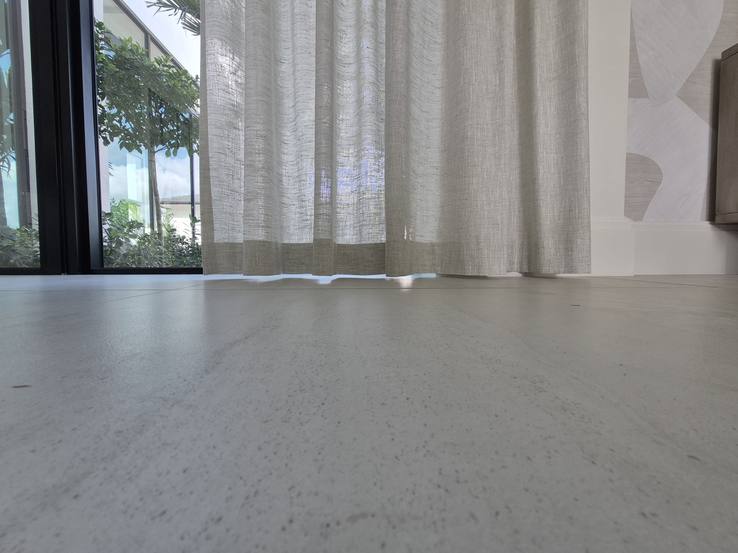
Most people cannot name the difference. When a ripplefold is right, nothing catches your eye, which is exactly the point: the room simply looks finished. Put one of our panels next to a standard one, both closed, and look at the last two feet above the floor. On the standard panel the waves have relaxed, some flatter, some closer together, and the rhythm you see at the top is gone by the hem. On ours, the waves at the floor are the same waves you see at the track.
This page explains what snap tape is, what the numbers 4 1/4 and 6 mean, why the small wave lets go, what the bigger one costs, and how to check any ripplefold quote before you sign it. It is written for homeowners, not for the trade.
How ripplefold works, in three parts
1. A tape with a row of snaps
Ripplefold has no pleats. Instead, a strip of tape with snaps at fixed intervals is sewn along the top edge of the panel, the heading. That interval is the number printed on the product: standard ripplefold tape is 4 1/4 inches on center, which means 4 1/4 inches of fabric between one snap and the next.
2. Carriers that slide in the track
Every snap clicks onto a small carrier that rides inside the track. The carriers are linked at a set distance, and that distance sets the fullness: how much fabric is gathered into each foot of track. Motorized tracks such as Lutron Sivoia QS and Somfy Glydea work exactly the same way.
3. The fabric in between makes the wave
The fabric leaves one carrier, bows out toward the room, comes back to the next carrier, bows toward the glass, and so on down the track. Each bow is one wave, and the size of the wave is set by how much fabric sits between two snaps. Ours has 6 inches to work with. The standard has 4 1/4.
The same track, drawn two ways
Two drawings, one difference. Both tracks carry identical carriers at identical spacing. The only thing that changes is the tape.
Why a 4 1/4-inch wave goes loose at the bottom
At the top of the panel the carriers do the work: they hold the fabric in its S-curve whether it wants to be there or not. Every inch below the track, the fabric is on its own. Only its own weight and its own body hold the curve. A small wave has little fabric in it, and by the bottom third it has relaxed. Some waves flatten out, some drift toward their neighbours, and the even rhythm you see at eye level is gone at the floor.
A 6-inch wave carries more fabric in every curve. The curve is rounder, it stands further off the track, and it has the body to hold that shape all the way down. With a weighted double hem and a fabric chosen for how it falls, the wave at the floor is the wave at the track.
Fabric matters too, but it does not fix the tape. A soft, well-draping fabric helps any ripplefold, and we choose fabrics for how they fall. In 12 years of making draperies we have hung every combination we could, and nothing beats 6-inch snap tape for a wave that holds.
4 1/4-inch snap tape vs 6-inch snap tape
| Standard ripplefold | Exotic Shades ripplefold | |
|---|---|---|
| Snap spacing on the tape | 4 1/4 in on center | 6 in on center |
| Fabric in each wave | 4 1/4 in | 6 in, about 40% more |
| Track and carriers | Standard snap carriers on a low-profile or motorized track | The same carriers, at the same spacing |
| Fullness (carrier spacing) | Set by the carrier spacing on the track; 80, 100 and 120% are the usual options | Same carrier spacing as a standard panel; the 6-in tape adds about 40% more fabric on top of it, all of it in the wave |
| Wave depth | Shallower | Deeper and rounder |
| Wave at the top of the panel | Even | Even |
| Wave in the bottom third | Relaxes: flatter, uneven spacing | Holds the same depth and spacing to the hem |
| Fabric and sewing per panel | Standard | More fabric to cut, seam and hem, more time at the machine |
| Works with | Manual, motorized and recessed tracks | The same tracks: Lutron Sivoia QS, Somfy Glydea, Forest, manual and recessed |
| Who builds it this way | Almost every workroom in the industry | Every ripplefold panel we make, in our own Fort Lauderdale workroom |
It costs more to make. We build it in anyway.
Six inches of fabric in every wave instead of 4 1/4 means about 40 percent more fabric in every panel: more yardage to buy, more widths to seam, longer hems to weight and finish, more time at the machine and at the table. On a wall of sheers that is not a small number. It is the reason almost nobody does it: the standard tape is cheaper, and at eye level the two look alike on installation day.
We build every ripplefold on 6-inch tape and it is part of every ripplefold quote we write, because we would rather you notice nothing at all, for years, than notice every evening that the bottom of your drapery does not match the top.
"I have been making curtains for 12 years, and this is my hack. Six-inch snap tape costs me more fabric and more labor on every panel, and I would not build a ripplefold any other way."David Martineau, founder, Exotic Shades & Draperies
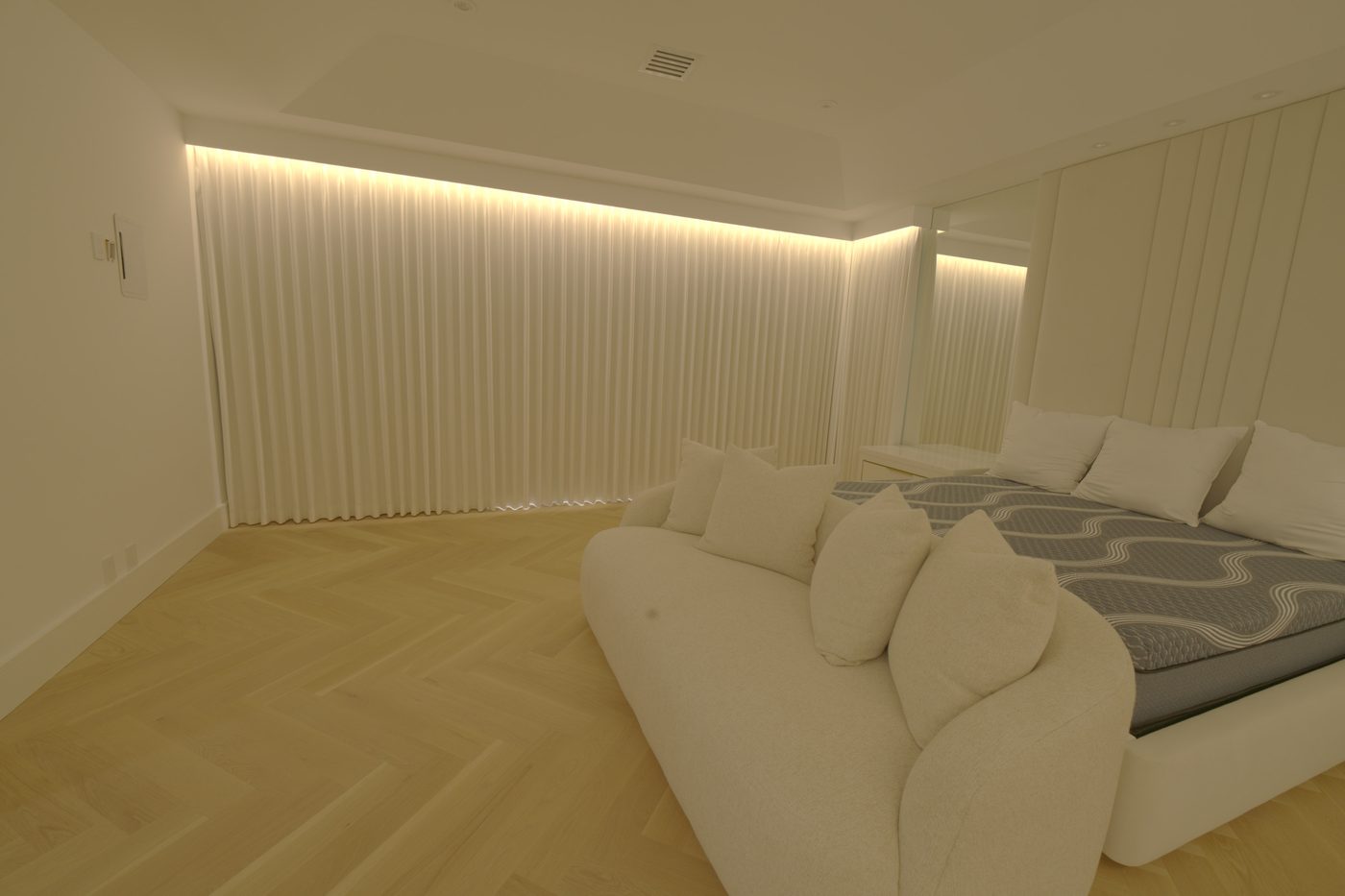
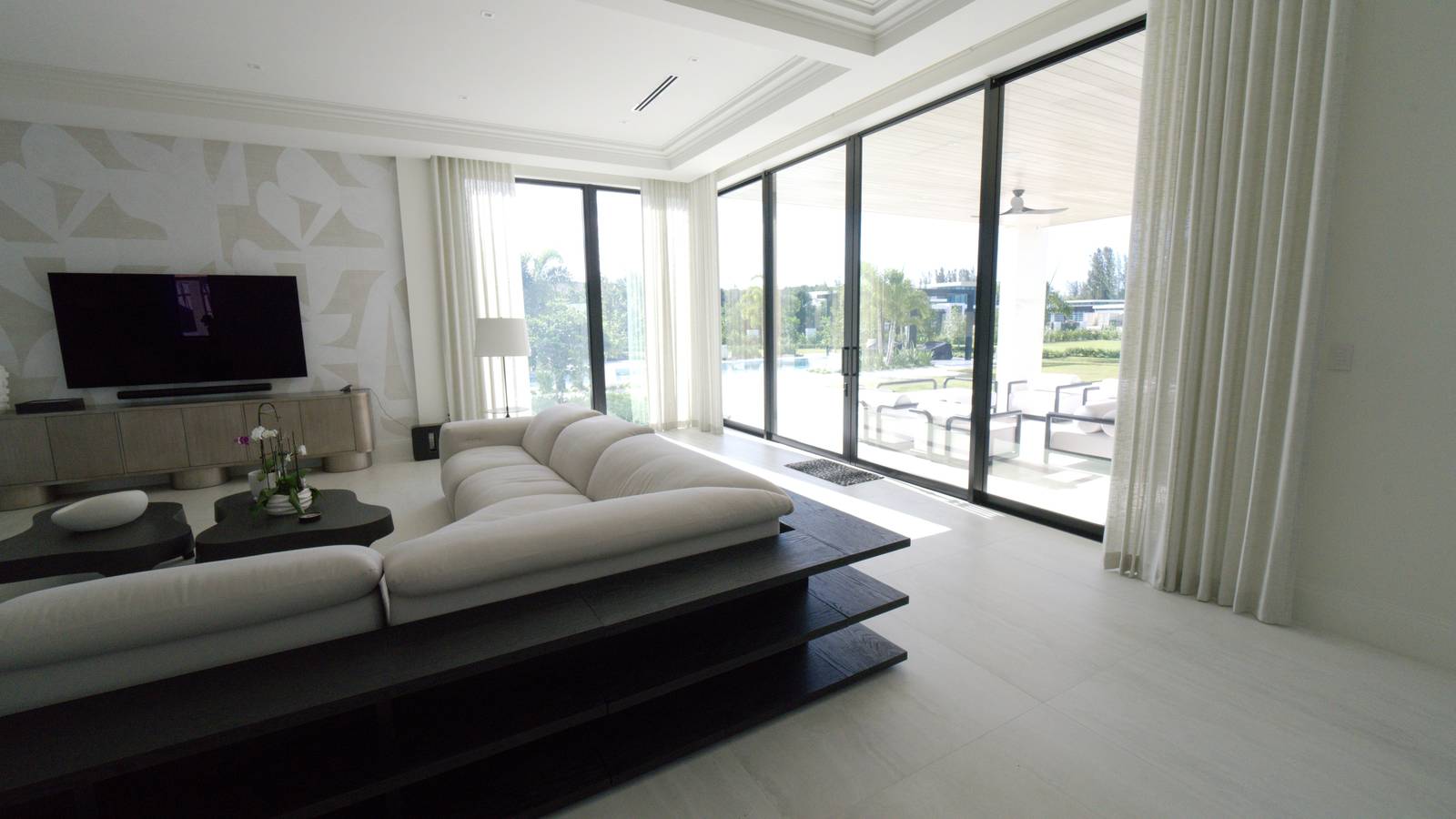
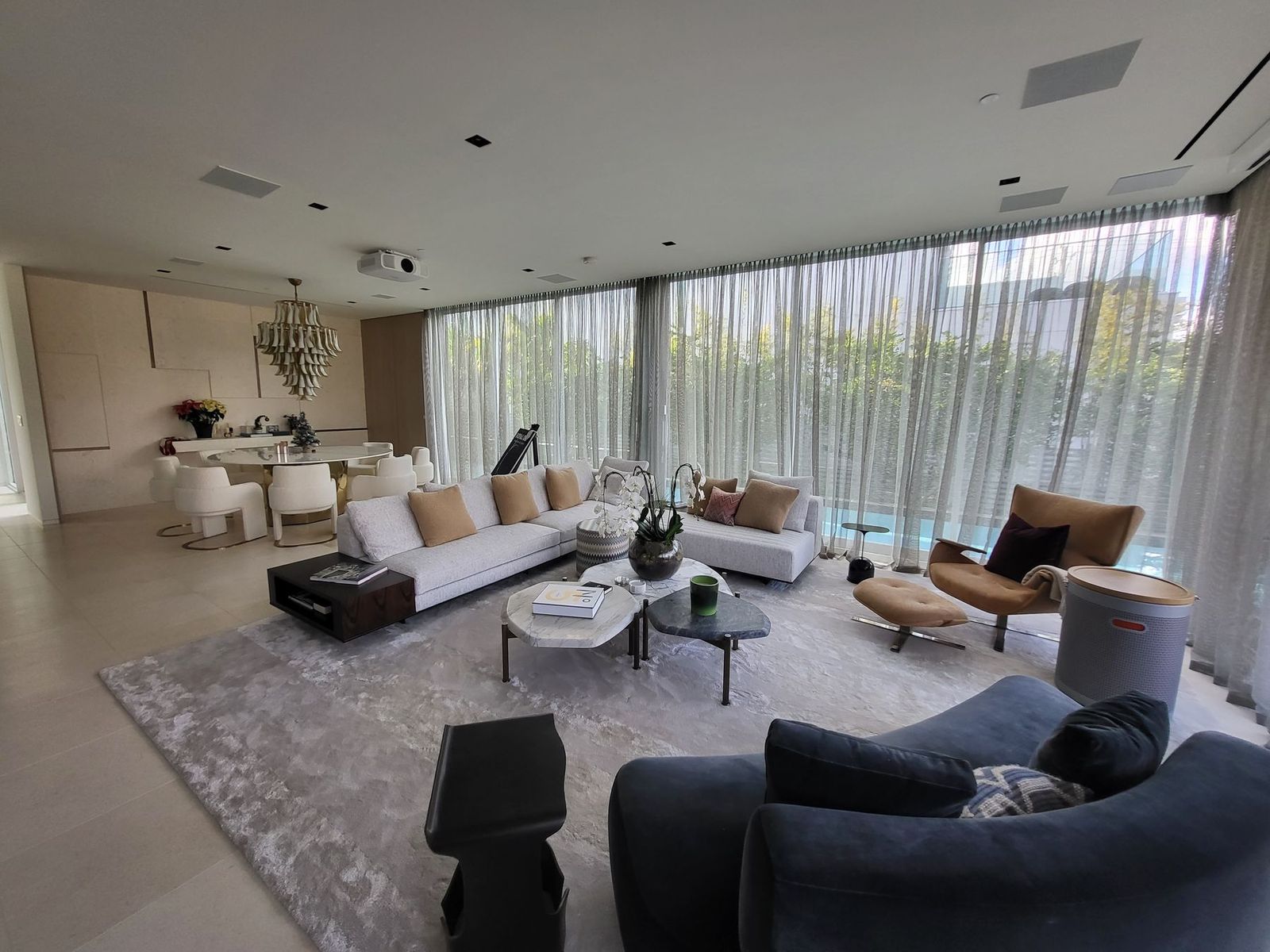
Look at the bottom third
Every drapery photo and video on this site shows panels built this way. Do not look at the fabric. Look at the last two feet above the floor.
How to check any ripplefold quote
Ask what snap tape spacing they use
The answer is almost always 4 1/4 inches, because that is the industry default and most workrooms have never used anything else. A blank look is an answer too.
Ask for a full-height photo, drapery closed
Installation-day photos are usually taken at eye level, where every ripplefold looks good. Ask for one that shows the hem, and compare the spacing at the floor with the spacing at the track.
Compare the fullness, not just the price
Two quotes for "ripplefold" can hold very different amounts of fabric. Ask for the fullness and the tape, then compare the numbers.
Check an existing drapery in a minute
Turn the top of the panel over and measure between two snaps. Standard tape: 4 1/4 inches. Ours: 6.
You are not shopping a price. You are shopping a result.
Two ripplefold quotes can list the same fabric, the same track and the same motor and describe two different draperies. The tape, the fullness, the hem, the way the panel is dressed before it leaves the workroom: none of it is on the quote, and all of it is what you look at every day. Our job is to deliver a result above what you expected, including the details you would never have known to ask for. Six-inch snap tape is one of them.
Frequently asked
What is snap tape on ripplefold drapery?
Snap tape is a woven tape with snaps at fixed intervals, sewn along the top edge of a ripplefold panel. Each snap clips to a carrier that rides in the track. The distance between two snaps sets how much fabric goes into each wave.
What does 4 1/4-inch snap tape mean?
The snaps are 4 1/4 inches apart on center, so each wave of the drapery is made from 4 1/4 inches of fabric. It is the industry-standard tape, and almost every ripplefold drapery is built on it.
What is 6-inch snap tape ripplefold?
Ripplefold drapery built on snap tape with the snaps 6 inches apart, hung on the same carriers and the same carrier spacing as a standard panel. Each wave holds 6 inches of fabric instead of 4 1/4, about 40 percent more, which gives it the body to keep its shape from the track to the floor. Exotic Shades & Draperies builds every ripplefold panel this way.
Why does ripplefold drapery look loose or uneven at the bottom?
The carriers shape the wave only at the top of the panel. Below that, the fabric holds the curve on its own. A 4 1/4-inch wave has little fabric in it, so in the bottom third the waves relax, flatten and drift toward each other. More fabric in each wave (6-inch snap tape), a weighted hem and a fabric that drapes well keep the wave even to the floor.
Does the 6-inch tape change the fullness?
The carriers sit at the same spacing as on a standard ripplefold track. The 6-inch tape adds about 40 percent more fabric on top of that, and all of it goes into deeper waves.
Does 6-inch snap tape use more fabric?
Yes. On the same carrier spacing, 6 inches of fabric per wave instead of 4 1/4 is about 40 percent more fabric in the panel, plus the extra seaming, hemming and sewing time that comes with it.
Does it cost more?
It costs more to make, in fabric and in labor, and it is built into every ripplefold quote we write. We do not build a 4 1/4-inch version.
Does 6-inch snap tape work with motorized tracks?
Yes. The tape changes only the amount of fabric between the snaps; the snaps and the carriers are standard. We hang it on Lutron Sivoia QS and Somfy Glydea motorized tracks, on manual tracks and in recessed ceiling pockets.
Does it work for sheers?
Yes. Our sheers and our lined draperies are built on the same 6-inch tape, including the tall sheers on oceanfront and estate glass shown on this site.
Is ripplefold the same as wave or S-fold drapery?
Yes. Ripplefold, ripple fold, wave fold, wave curtains and S-fold all describe the same snap-tape-and-carrier system. Ripplefold is the North American trade name; wave and S-fold are the usual names in Europe and Australia.
How can I tell which tape my drapery was made with?
Turn over the top of the panel and measure between two snaps. 4 1/4 inches is standard tape. 6 inches is ours.
Discerning homeowners, designers, and developers across South Florida trust Exotic with their most important spaces.
"I'm really happy with my new curtains! The team came to my place, helped me choose the right fabric, and guided me through the whole process. Great service and beautiful results. Highly recommend, A+."
"We were referred to Exotic Shades by our contractor. They understood exactly what we had in mind and delivered it. The whole process was simple, and the pricing was very good."
"I needed help adjusting the existing Lutron shades in my new home. Most companies would not touch a system installed by someone else, but Exotic sent a technician the same week."
Exotic Shades & Draperies, Fort Lauderdale and Miami Beach
Exotic Shades & Draperies is a South Florida window-treatment company that designs, sews and installs its own work: Lutron and Somfy motorized shades, custom draperies sewn in our Fort Lauderdale workroom by five in-house seamstresses, plantation shutters and blinds. Established in South Florida in 2024, backed by more than 20 years of window-treatment manufacturing and installation experience. Lutron certified dealer, Somfy Expert, Crestron and Control4 integration. The same in-house team measures, installs and programs every project; when shading has to integrate with another control system, we bring in our smart-home partner Adom Smart Home.
Fort Lauderdale workroom and showroom
4539 Powerline Rd, Fort Lauderdale, FL 33309 · 954-881-9331
Miami Beach showroom
500 South Pointe Dr #150, Miami Beach, FL 33139 · 954-872-9007
Where we install
Miami-Dade, Broward and Palm Beach counties: Miami Beach, Sunny Isles and Aventura through Hollywood, Fort Lauderdale and Pompano Beach to Boca Raton, Delray Beach and West Palm Beach, with projects in the Caribbean and New York.
How a project runs
Free in-home measurement, a written quote from the same engine as our published prices, fabrication in our own workroom, installation and programming by our own team, and service on the systems we install.
Ripplefold drapery built on 6-inch snap tape, from Miami to Palm Beach
Every ripplefold panel we sew in our Fort Lauderdale workroom is built on 6-inch snap tape, whether it hangs on a manual track, a Lutron Sivoia QS or Somfy Glydea motorized track, in a ceiling pocket or on the wall. The same in-house team measures, sews, installs and programs from Miami Beach to West Palm Beach.
See the difference in your own room
One free hour with our team routinely saves owners thousands in avoidable mistakes. Book a private, complimentary consultation - we bring fabrics, made-up samples and honest answers.