

Blinds vs Shades vs Drapes: Pros, Cons and Which to Choose in South Florida
September 18, 2026 · Guides · By David Martineau
Blinds, shades and drapes are three different ways to cover the same glass, and each one is right somewhere. This guide compares them on light, view, darkness, heat, humidity, sliding doors, motorization, upkeep and cost, gives the honest pros and cons of each, and says which one we install where, from Miami to Palm Beach.
The short answer. Blinds are slats that tilt: the most precise light control, always a little light through the slats, and usually the lowest cost per window. Shades are one piece of fabric on a roller or in folds: the widest range, from a solar screen that keeps the view to a blackout that darkens a bedroom, and the easiest to motorize. Drapes are sewn fabric panels on a rod or a track: the softest look, the best insulation when lined, and the highest cost. On South Florida glass we install shades most, layer draperies over them where the room deserves it, and put blinds in kitchens, bathrooms and studies.
What is the difference between blinds, shades and drapes?
Blinds are a set of hard slats or vanes that tilt to meter light and lift or draw aside to clear the glass. Horizontal blinds in real wood, faux wood or aluminum tilt up and down; vertical blinds and Allusion sheer verticals rotate and draw sideways, which is why they suit sliding doors. Tilted closed, they always pass some light at the slats.
Shades are a single piece of material that rolls, folds or stacks: roller and solar shades, dual rollers, zebra, sheer shades, honeycomb (cellular), Roman, woven wood and skylight shades. The fabric decides what the shade does: a 3% solar screen keeps the view and cuts glare, a blackout fabric with side channels makes a bedroom dark, a honeycomb insulates.
Drapes, or draperies, are panels of fabric sewn to the window and hung from a rod or a track: sheers, ripplefold, pinch pleat and blackout draperies. Curtains are the casual, unlined, standard-length version; draperies are lined, often interlined, and cut to the opening. Ours are sewn in our own workroom by five in-house seamstresses and hung on decorative rods or motorized tracks.
Every one of the 17 types is defined and priced in the South Florida window treatment guide. This page is the shorter question: which of the three families belongs on your window.
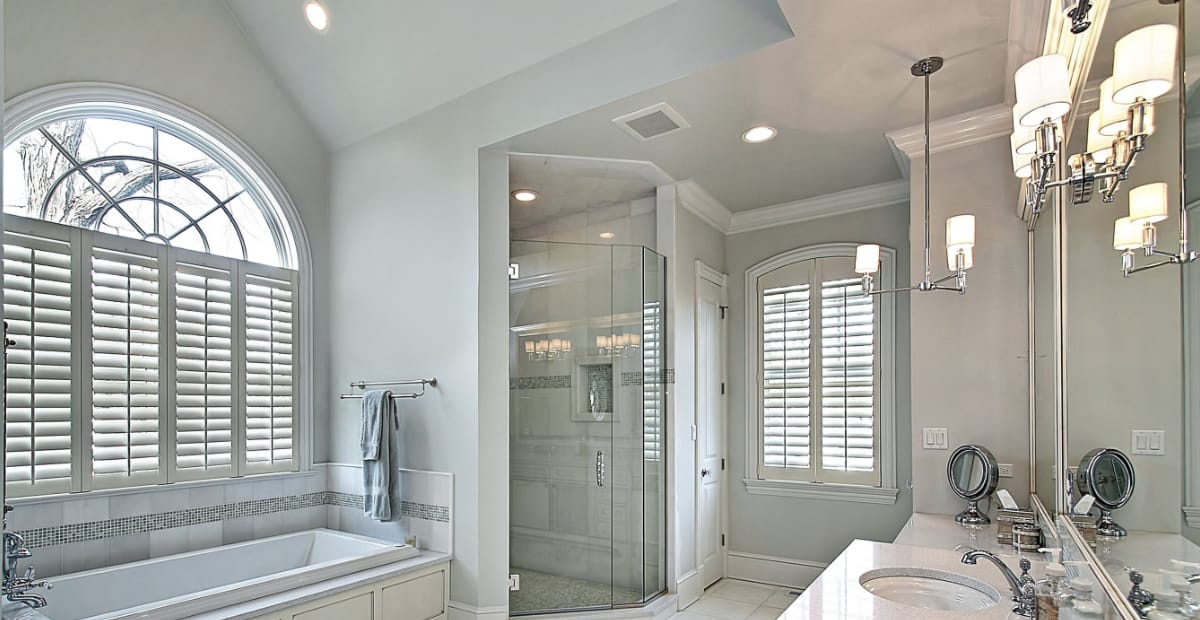
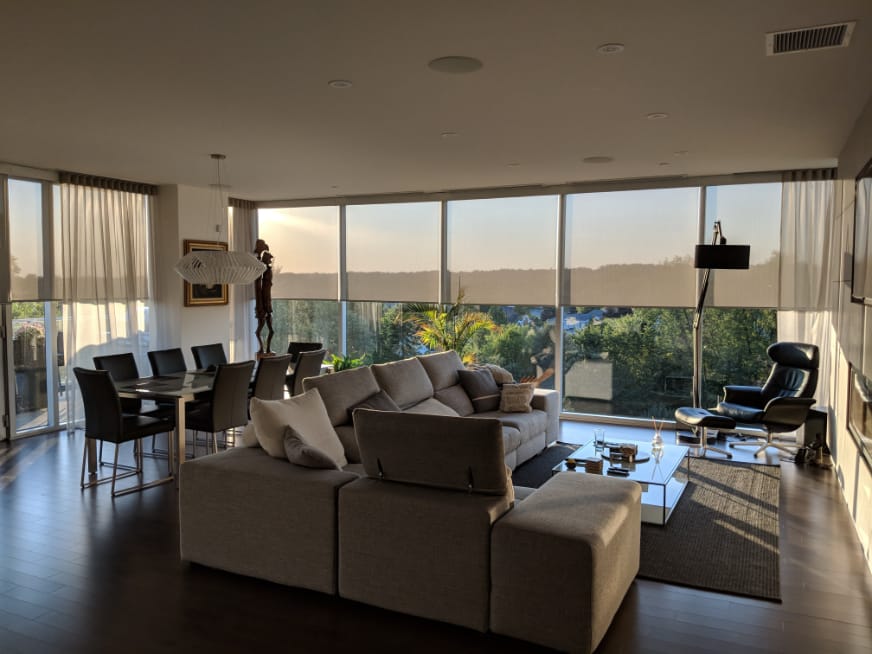
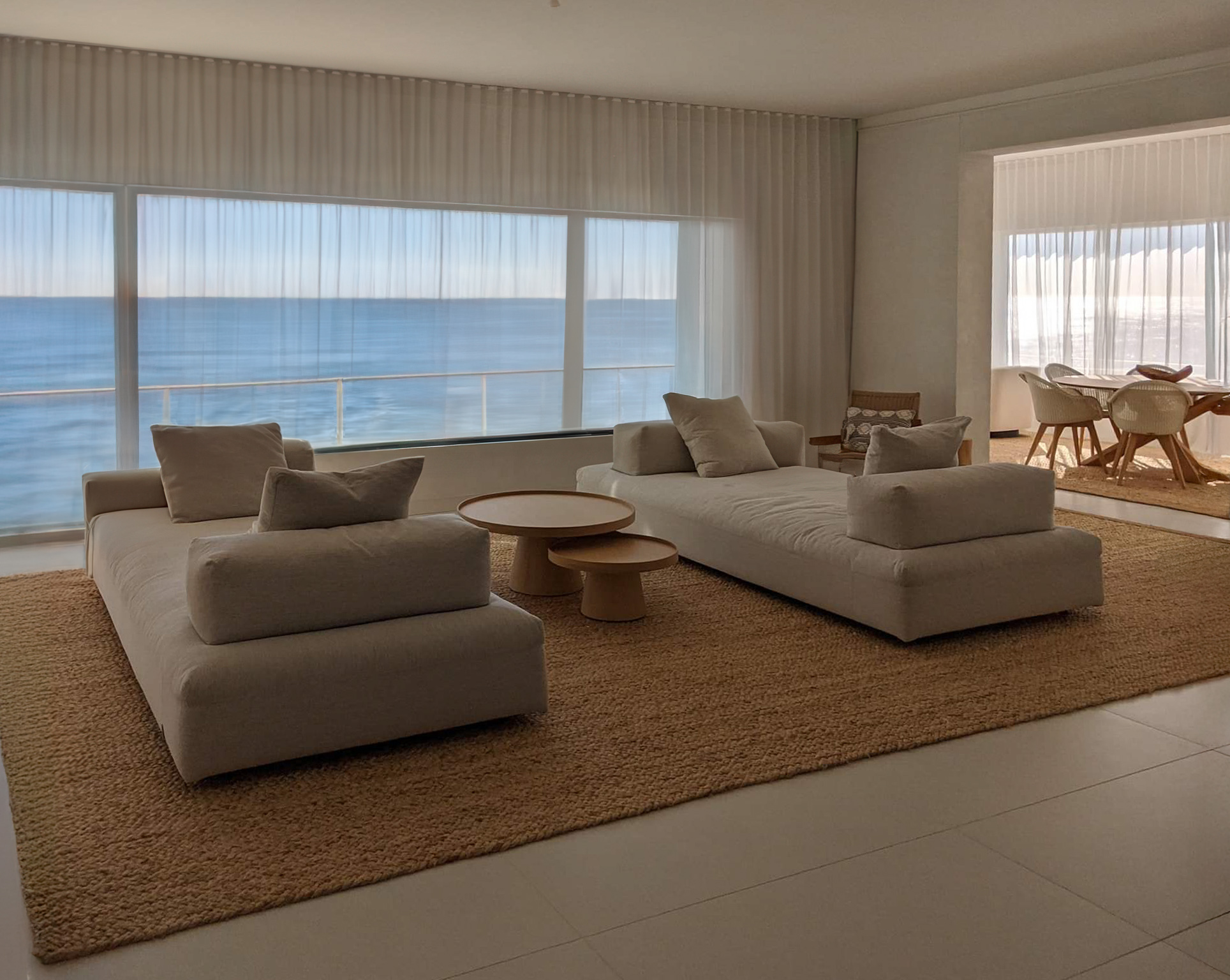
Blinds vs shades vs drapes: the comparison table
The table compares the three families on the things that decide a South Florida window. Prices are our own published figures, budgetary and before tax, from the pricing guide.
| Blinds | Shades | Drapes | |
|---|---|---|---|
| Light control | The most precise: tilt the slats to any angle | Set by the fabric: screen, light-filtering or blackout; a dual roller gives two in one window | Open or closed; sheers filter, lined panels block |
| View when closed | Through tilted slats only | A solar screen keeps it (3% charcoal shows the water); other fabrics close it | Sheers soften it; lined panels close it |
| Darkness for sleep | The weakest: light passes at the slats and the ends | The strongest: blackout roller with side channels, or a double-cell blackout honeycomb | Very good with a blackout lining, a return to the wall and a center overlap |
| Heat and insulation | Low | Solar screens reflect heat (a white 3% E Screen reflects 73% of solar energy); honeycomb is rated R 3.5 to R 4.4 | Good when lined and interlined; best layered over a screen |
| Humidity: kitchens, baths, laundry | Faux wood and aluminum: the best of the three | Washable weaves and screens; keep silk and unlined fabric away from the sink | Not the room for them |
| Sliding doors and floor-to-ceiling glass | Verticals and Allusion sheer verticals only | A motorized roller that clears the handle; two coupled shades on one motor past 144 in | Ripplefold sheers or lined panels on a motorized track, stacked on the fixed side |
| Motorization | Motorized tilt and lift on Lutron and Somfy | The easiest: Lutron, Somfy or Essential, battery or wired | Motorized tracks, battery or wired, recessed into the ceiling if you want |
| Cleaning and upkeep | Dust each slat; faux wood wipes clean | Vacuum with a brush; screens wipe clean | Vacuum; dry-clean lined panels |
| The look | Crisp, tailored, architectural | Clean and minimal; disappears into a ceiling pocket | Soft, tall, layered; the finish of the room |
| Published cost | Quoted per window; usually the lowest of the three | One 72 x 84 in motorized roller from about $733 (Essential) to $3,141 (Lutron), fabric and motor included | Sheers $85 per linear foot of width on a manual track in a house, $95 in a condo; a 12 ft motorized track about $1,452 track only, $2,833 with a smart-hub motor and lined drapery |
| Best rooms here | Kitchens, baths, laundry rooms, studies | Living rooms with a view, bedrooms, offices, sliders, skylights | Living and dining rooms, bedrooms, walls of glass, 9 to 12 ft ceilings |
Blinds: pros and cons
Blinds are the oldest answer and still the right one in a few rooms. Real wood brings warmth to a study or a bedroom, faux wood and aluminum go where water and steam live, and vertical vanes are one of the few treatments you can walk straight through on a sliding door.
Pros
- Light control by tilt. No other treatment meters daylight as finely: a few degrees of slat angle changes the whole room.
- Humidity. Moisture-proof faux wood and aluminum do not warp or fade in bathrooms, kitchens, laundry rooms and covered patios. Inside a conditioned home, real basswood does well in living spaces and bedrooms.
- Sliding doors. Vertical blinds and Allusion sheer verticals rotate and draw aside, so the panel you slide stays clear.
- Cost. Per window, a manual blind is usually the least expensive treatment we quote.
- Motorization. Lutron and Somfy motorize the tilt, and Lutron's Triathlon wood blinds tilt and lift on the motor, in 18 Basswoods colours up to 108 in wide, on the same keypads and schedules as your shades.
Cons
- Never dark. Light passes at the slats and at both ends of the headrail, so a blind is the wrong answer for a bedroom that needs to be black.
- Dust. Every slat is a shelf. Faux wood wipes clean; real wood wants a duster.
- Depth. A 2 in wood blind needs about 3 in of frame depth to sit flush inside the opening; shallower frames show the slats or go outside mount.
- Walls of glass. Horizontal blinds across a sliding door block the panel you slide, and a bank of blinds on floor-to-ceiling glass carries more visual weight than one clean shade.
- Real wood in wet rooms. Basswood belongs in dry living spaces; near a sink or a shower it is the common mistake.
Best for: kitchens, bathrooms, laundry rooms, studies, and any window where you want to tune the light by the hour. See custom blinds.
Shades: pros and cons
Shades are what we install most, because the fabric can be chosen to do almost anything and the shade itself disappears. Eight types cover the range: roller, dual roller, zebra, sheer, honeycomb, Roman, woven wood and skylight.
Pros
- The view. A charcoal 3% solar screen passes about 5% of solar energy and still shows the water. Nothing else keeps a South Florida view and kills the glare at the same time.
- Real darkness. A blackout roller in side channels, or a double-cell blackout honeycomb, is as dark as an interior treatment gets. A dual roller puts a screen for the day and a blackout for the night in one window.
- Heat. Light-coloured screens reflect solar energy before it becomes heat (a white 3% E Screen reflects 73%), and honeycomb shades are the only soft treatment with a published R-value, R 3.5 to R 4.4.
- Motorization. The easiest treatment to motorize: Lutron, Somfy or our Essential tier, wired or on rechargeable batteries, which is why they suit condos where no wall can be opened.
- They disappear. A recessed ceiling pocket hides the roll completely; a fascia covers it with a clean profile. One shade reaches 144 in wide, and wider glass takes two coupled shades on one motor.
Cons
- All or nothing. Except for sheer shades and zebras, a shade is up or down; it does not tilt.
- The light gap. Every inside-mounted shade leaves a thin line of daylight at the edges. Accept it, go outside mount, or add side channels; the mount guide explains the choice.
- Opaque fabrics close the view. Blackout, honeycomb and Roman shades give no view when they are down, so on a window with a view they go in a dual roller or behind a screen.
- Stack. Roman shades fold at the top and cover part of the glass even when raised.
- The motor sets the price. The same 72 x 84 in shade runs from about $733 on the Essential tier to $3,141 on Lutron, so the system decides the budget more than the fabric does. The cost-by-system page lays the four tiers side by side.
Best for: living rooms with a view, bedrooms, home offices, sliding doors, skylights, and every window you want on a schedule. See custom shades and motorized shades and blinds.
Drapes: pros and cons
Draperies are the finish of a room. They bring softness, height and colour that no hard treatment has, and on 9 to 12 ft ceilings they carry the scale of the glass. In a coastal home they are rarely alone: the usual pairing is a sheer or a lined drapery in front of a solar shade.
Pros
- Softness and scale. Floor-to-ceiling panels make tall glass look intended, and a ripplefold on a track reads as one continuous wave across a wall of windows.
- Insulation and quiet. A lining and an interlining add body, block heat and absorb sound. A blackout drapery with a return to the wall and a center overlap darkens a bedroom nearly as well as a shade in channels.
- Layering. Sheers over a solar roller is the combination we install most: view and glare control by day from the shade, privacy and softness at night from the sheer.
- Motorized tracks. Battery or wired tracks, including tracks recessed into the ceiling, so the drapery moves on the same schedule as the shades.
- Made to the window. Sewn in our own workroom, to the fullness, length and lining the room asks for, from fabric chosen at the mills.
Cons
- Stack space. An open drapery has to go somewhere: 12 to 18 in of wall on each side of a wide window, or a stack on the fixed side of a slider.
- Cost. Lined custom draperies on a motorized track are the most expensive of the three families per window.
- Upkeep. Lined panels are vacuumed between dry cleanings; sheers can often be laundered.
- Wet rooms. Kitchens, bathrooms and laundry rooms are not the place for fabric panels.
- Sheers alone. A sheer softens the view and the light but gives no darkness and little privacy at night; it needs a shade or a lined panel behind it.
Best for: living rooms, dining rooms, bedrooms, walls of glass and any room with tall ceilings. See custom draperies.
Which is best for South Florida sun and heat?
A solar screen roller shade first, a honeycomb shade second, and lined draperies layered over a screen third. Blinds do the least against heat.
The numbers decide it. A charcoal Mermet E Screen at 3% passes about 5% of solar energy and keeps the view; 1% blocks more on a west wall. A white 3% screen reflects 73% of solar energy before it becomes heat in the room. Honeycomb shades trap air in their cells and are rated R 3.5 to R 4.4, the only soft treatment with a published R-value. A drapery with a lining and an interlining adds a second layer in front of either. On a terrace, outdoor shades stop the heat before the glass. The openness guide gives the figures by percentage and colour.
Which is best for a bedroom?
A shade or a drapery, not a blind. Three answers work: a blackout roller shade with side channels, a double-cell blackout honeycomb (rated R 4.4 and among the darkest treatments we install), or blackout draperies with a return to the wall and a center overlap.
When the bedroom has a view you want by day, a dual roller shade puts a solar screen in front of a blackout in one window, or sheers on a track go in front of a blackout shade. Blinds leak light at the slats and the ends; in a room where sleep matters, that shows at six in the morning.
Which is best for sliding glass doors and floor-to-ceiling glass?
A motorized roller or solar shade that clears the handle, ripplefold sheers or lined draperies on a motorized track, or Allusion sheer verticals for a door you walk through all day. Horizontal blinds across a slider are the common mistake: they block the panel you slide.
Plan around the moving panel and the handle, stack the drapery on the fixed side, and for openings wider than 144 in expect two coupled shades on one motor. Floor-to-ceiling glass has no frame, so the shade mounts to the ceiling or into a pocket across the whole span; the sliding door page and how to cover large windows show the options in real rooms.
Which is cheapest: blinds, shades or drapes?
Per window, a manual blind is usually the least expensive, a motorized shade sits in the middle, and lined custom draperies on a motorized track cost the most. Motorization moves the number more than the family does.
Our published figures, budgetary and before tax: one 72 x 84 in motorized roller shade, fabric and motor included, runs about $733 on the Essential tier, $793 on Somfy WireFree, $1,910 on wired Somfy and $3,141 on Lutron; by size, one shade from about $501 (36 x 60 in, Essential) to $4,064 (144 x 120 in, Lutron). Custom sheers are $85 per linear foot of width on a manual track in a house and $95 in a condo; a 12 ft motorized drapery track is about $1,452 track only or $2,833 with a smart-hub motor and lined drapery; a motorized blackout drapery on a 16 ft track in a recessed pocket is about $3,691. Blinds are quoted per window. The pricing guide has the full tables and the instant price tool gives the same figures for your own openings.
Can you combine blinds, shades and drapes?
Yes, and the best rooms usually do. Sheer draperies over a solar roller is the pairing we install most; a blackout drapery over a screen shade turns an oceanfront bedroom from view by day to black at night; wood blinds with a side panel of drapery suit a study.
The rule is one system at the glass and one in front of it, both on the same control. Lutron, Somfy, Crestron and Control4 run shades, blinds and drapery tracks from the same keypads and schedules. On a new build, the shade pocket and the drapery track are drawn into the ceiling together so nothing shows but fabric.
Room by room: which one we install
| Room | First choice | Also works | The common mistake |
|---|---|---|---|
| Living room with a water view | Solar roller shade, 3% charcoal, motorized | Sheer draperies layered over it; sheer shades | Anything that closes the view all day |
| Bedroom | Blackout roller with side channels, or a double-cell blackout honeycomb | Dual roller for a view by day; blackout draperies | A solar screen alone, or blinds: neither is dark |
| Kitchen | Faux wood blinds or a light-filtering roller | Roman shade in a washable weave | Real wood or unlined fabric next to the sink and the stove |
| Bathroom | Faux wood blinds or plantation shutters | Honeycomb, privacy-lined roller | Real wood, silk, unlined weaves |
| Home office | Solar roller at 3% or 5% | Sheer shades; wood blinds for tilt control | Glossy blackout fabrics that make a screen the only light |
| Media room | Blackout roller with side channels | Blackout draperies with returns and overlap | Blinds and louvers: light gets through the slats |
| Dining room | Draperies on a track, sheer or lined | Roman shades; zebra shades | Bare glass at night |
| Sliding glass door | Motorized roller that clears the handle | Allusion sheer verticals; ripplefold sheers on a track; bypass shutters | Horizontal blinds that block the panel you slide |
| Skylight | Honeycomb in tensioned side tracks, motorized | Roller in side tracks | Anything manual |
| Terrace, lanai, balcony | Motorized outdoor screen in zippered channels | Retractable systems by project | Interior hardware outdoors |
Quick decision guide
- You want the view and less glare: solar shade
- The room has to be dark: blackout shade with side channels, or blackout draperies with returns; not blinds
- Kitchen, bathroom, laundry: faux wood blinds or a washable roller
- Tall glass, 9 to 12 ft ceilings: draperies, or sheers over a shade
- Sliding door: motorized roller or ripplefold sheers on a track; never horizontal blinds
- Condo with no wiring: battery shades or a battery drapery track
- Tight budget per window: blinds; tight budget with motorization: Essential-tier shades
- Not sure: a shade at the glass now, draperies in front later. The track can be planned today and hung when the budget allows.
Frequently asked questions
Are blinds or shades better?
Shades, for most South Florida rooms. A solar screen keeps the view and cuts glare, a blackout roller with side channels darkens a bedroom, and a shade is the easiest treatment to motorize. Blinds win where you want to meter light by tilting, and in kitchens, bathrooms and laundry rooms, where faux wood shrugs off humidity.
Are shades or drapes better for insulation?
Honeycomb shades are the only soft window treatment with a published R-value, R 3.5 to R 4.4, so on a bare window they insulate best. Lined and interlined draperies come close and add sound absorption. The best result on a hot wall is both: a solar screen or honeycomb at the glass with a lined drapery in front.
Which is best for privacy at night?
A blackout or light-filtering roller shade, a honeycomb, or a lined drapery. A solar screen alone is the common mistake: it keeps the view by day and turns see-through at night once the lights are on inside. In bedrooms with a view we put a screen and a blackout on one dual roller, or sheers over a blackout shade.
Which lasts longer: blinds, shades or drapes?
All three last for years when they are built to the window and put in the right room. What shortens the life of a treatment is the wrong material in the wrong place: real wood in a humid bathroom, an unlined silk on a west window, a fabric that is not rated for sun. Choose by the room and any of the three will serve.
Which is easiest to clean?
Faux wood blinds and roller shades: both wipe clean with a damp cloth. Real wood blinds want a dry duster. Honeycomb and Roman shades vacuum with a brush attachment. Lined draperies vacuum between dry cleanings; sheers can often be laundered. Motorized shades gather less dust because they are moving fabric, not a stack of slats.
Can blinds, shades and drapes all be motorized?
Yes. Shades motorize most easily, on Lutron, Somfy or our Essential tier, battery or wired. Draperies run on motorized tracks, including tracks recessed into the ceiling. Wood blinds tilt and lift on the motor on Lutron and Somfy systems. All three can share the same keypads, remotes and schedules, and join Crestron or Control4 homes.
Are blinds outdated?
No. Wood blinds and plantation shutters are classics. What dates a room is the wrong product in the wrong place: aluminum minis on a formal window, verticals across a picture window, blinds on a wall of glass that wanted one clean shade. The rooms we install most in 2026 are layered: a shade at the glass and sheers or draperies in front.
What is the difference between curtains and drapes?
Curtains are casual, unlined panels bought to a standard length. Drapes, or draperies, are lined, often interlined, pleated or ripplefold, and cut and sewn to the window. Ours are made in our own workroom by five in-house seamstresses and hung on decorative rods or motorized tracks.
Which should I choose for a condo?
Shades first: they fit floor-to-ceiling glass, run on rechargeable-battery motors where you cannot open walls, and give the neutral street-side look many associations ask for. Add sheers on a motorized track where the room deserves softness. Dual roller shades with battery motors are what we put on oceanfront condo bedrooms every week.
Do I need the same treatment in every room?
No. Keep the look consistent from the street, then choose by the room inside: solar shades where there is a view, blackout in bedrooms, faux wood blinds in wet rooms, draperies where you want softness and scale. Put everything on one control system and it reads as one home, not a collection of decisions.
What about plantation shutters?
Shutters are a fourth family: hinged panels with wide louvers, built to the opening and finished like the house. They give a view with the louvers open, partial darkness closed, and humidity-ready finishes for bathrooms and salt air. Our types guide covers them alongside the other 16 window treatments.
Time to dress your windows?
One free hour with our team routinely saves owners thousands in avoidable mistakes - wrong fabrics, bad mounts, missed motorization. Book a private, complimentary consultation - we bring the fabrics, the swatches, and honest answers. Start with the free guide: the 5 costly mistakes.