
Motorized Shades for Schools and Universities, Room by Room
October 8, 2026 · Guides · By David Martineau
A classroom asks three things of a window shade that a living room never does. It has to keep the daylight while taking the glare off the board and the screens, go dark for a projector with one press, and survive thirty students a day with nobody adjusting a chain. A school also brings two rules a homeowner never meets: the fire code's line on draperies and curtains in educational buildings, and, on a Florida K-12 campus, the Jessica Lunsford Act for anyone working there while students are present. Schools are one of the commercial categories we specify, fabricate and install for out of our Fort Lauderdale workroom. This is how we would specify each room, with the published figures, the rules as written and the parts we would talk you out of.
The short answer. Classroom: a 3% solar screen that keeps the daylight and takes the glare off the board, a blackout layer on a dual shade where a projector lives, one wall switch at the teacher's position, NFPA 701 listed fabric and no cords anywhere. Lecture hall: 50 or more seats makes it an assembly occupancy, where NFPA 701 is required; blackout with side channels on wired motors, lowered by the presentation scene of the room's AV system. Library: a tighter screen on the sun walls, for glare over the tables and UV over the stacks. Residence hall: a blackout or room-darkening shade for sleep and privacy, installed between move-out and move-in. On a K-12 campus the work happens when students are not there, under a district employee's direct supervision, or with a screened crew.
Three rooms, three different jobs
One campus, the same decision made three times. A library follows the classroom column with a tighter screen on the sun walls; every cell is explained in the sections that follow.
| Classroom | Lecture hall or auditorium | Residence hall | |
|---|---|---|---|
| The problem | Sun on the board and the screens at the hour the lesson needs them | A room that has to go dark for a slide, then get its daylight back | Sleep at 9 AM, privacy at street level, heat in the west rooms |
| Day fabric | 3% screen, dark where the room faces the glass | 3% screen between presentations | Screen only where a room takes the afternoon sun |
| Opaque layer | Dual shade with blackout where a projector or large screen lives | Blackout with side channels | Blackout or room-darkening shade |
| Control | One wall switch at the teacher's position, a schedule per facade, a facilities override | Presentation scene from the AV system, one button at the lectern | Motorized, or a cordless manual shade; never a loop cord |
| Power | Wired low voltage; battery only for a few windows | Wired low voltage on the AV integrator's bus | Wired in new construction, battery in a finished building |
| The code line | K-12: draperies and similar furnishings must meet NFPA 701 | 50 or more people: assembly occupancy, NFPA 701 required | Ask the fire marshal; we specify listed fabric anyway |
| Install window | Summer, breaks, weekends | Between terms, or nights | Between move-out and move-in |
Classrooms: keep the daylight, lose the glare
The research on classrooms says two things at once. Daylight helps: in the Heschong Mahone Group's 1999 study for PG&E, built on more than 21,000 student records, students in the Capistrano district's most daylit classrooms progressed 20% faster on math tests and 26% faster on reading tests in one year than students in the least daylit ones, and in Seattle and Fort Collins the most daylit classrooms scored 7% to 18% higher. Glare hurts: the same group's 2003 follow-up for the California Energy Commission, in Fresno, associated direct sun penetration, especially through unshaded east or south windows, with lower student performance, found that performance suffered when teachers had no control of their windows, and noted that blinds or curtains let teachers control the glare. That second study could not replicate the Capistrano numbers, so treat the 20% and 26% as one district's result. The finding that holds across both is the useful one: keep the daylight, control the sun, and give the control to the teacher.
In practice that is a 3% solar screen on the sun-facing glass. It passes daylight, keeps the view out, and takes the brightness off the board, the screens and the front rows. Dark where glare is the problem, which in a classroom is most of the time; light where the room overheats and nobody faces the glass. The dark or light guide has the mills' view and heat figures for each colour, and the openness guide the rest. Where the room projects, the screen gets a blackout partner on a dual shade: two fabrics on two tubes in one bracket, each on its own preset.
The finding about teacher control is the argument for the motor. A row of eight windows on bead chains gets set once in September and left there; one wall switch at the teacher's position gets used, because using it costs one press. Add a schedule per facade, east glass closing in the morning and west glass after lunch, and a facilities override that can move a whole wing at once, and the shades do their job whether or not anyone remembers them.
No cords is the other reason. The CPSC calls cordless window coverings the only option that eliminates the strangulation hazard, and a motorized shade has nothing to pull: no cord, no chain, no loop. That is the standard we would hold for every room a young child uses, from pre-K up; our child-safe window treatments guide has the regulator's numbers. Nothing to pull also means nothing to snap or tangle, and the screen fabrics we specify, vinyl-coated fiberglass and polyester, wipe down with mild soap and water; see how to clean shades and drapery.
Lecture halls and auditoriums: dark on cue
A lecture hall is a different occupancy, and that changes the rules before it changes the fabric. Past the twelfth grade the Life Safety Code usually treats a classroom as a business occupancy, but a room for 50 or more people is an assembly occupancy, and the assembly chapters of NFPA 101 require draperies, curtains and similar furnishings to meet section 10.3.1, which means NFPA 701. A 150-seat lecture hall or an auditorium gets listed fabric, with the certificate on file for the fire marshal.
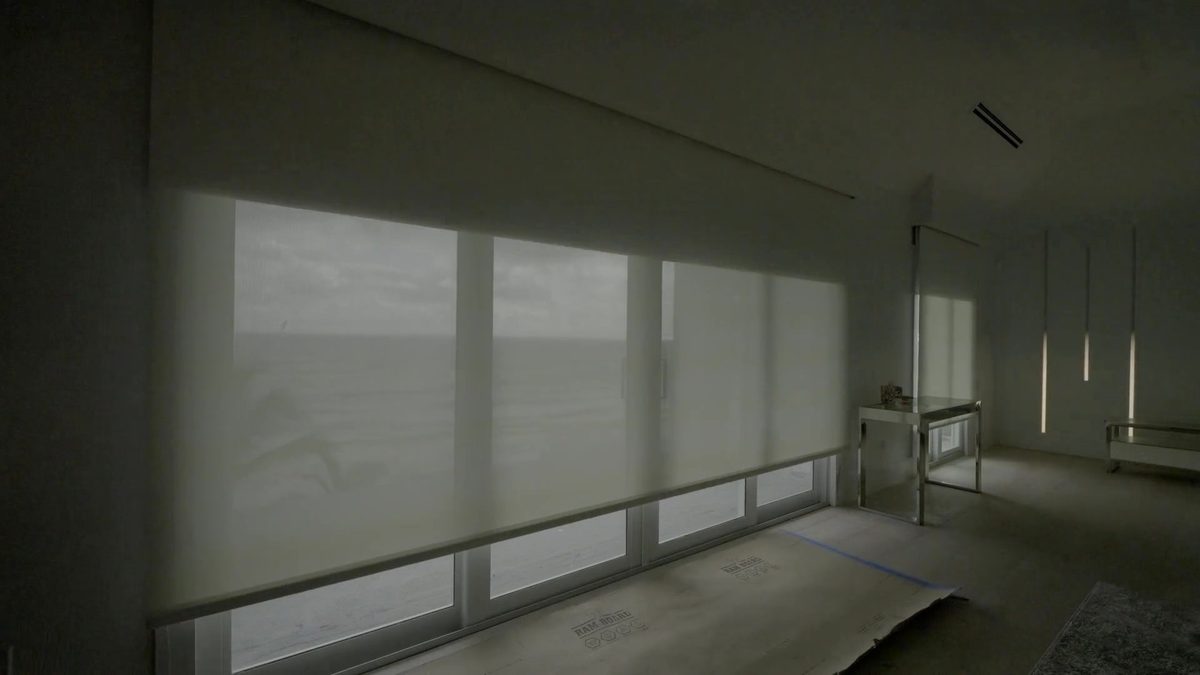
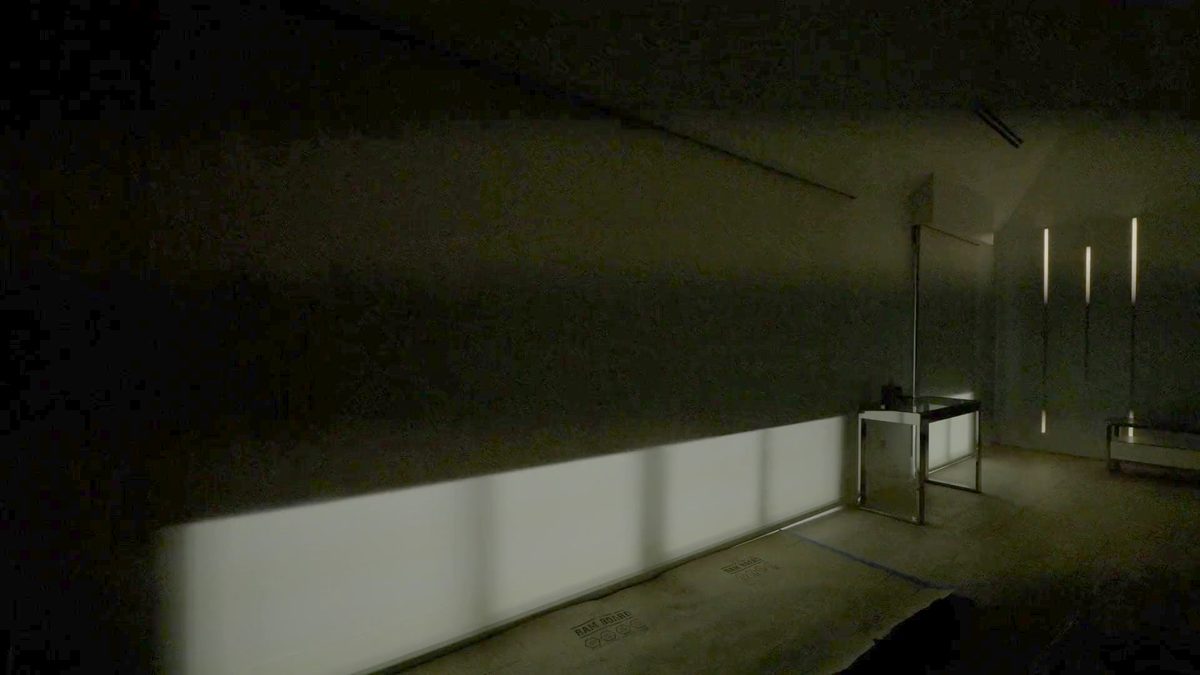
Then the fabric. A blackout fabric on its own still leaks light at the edges, a bright line down each side that shows on a projection screen; side channels close those gaps, and on the window wall behind a presenter they are what makes a slide readable at noon. The day layer is a 3% screen, so the hall gets its daylight back between presentations. The two together are a dual shade, each layer on its own motor.
And the control. In a lecture hall the shades belong to the AV system: the presentation scene lowers the blackout and dims the lights, the end of the lecture lifts both, and the lectern gets one button for the exceptions. Where the room runs Crestron, the shades are Crestron QMT motors on Cresnet; in a Lutron building, Sivoia QS on its wired link; elsewhere, Somfy SDN on an addressed bus. One more thing worth knowing before the design meeting: a screen shade does little for the acoustics of a hard room. Mermet publishes a noise reduction coefficient of 0.05 to 0.35 for E Screen, depending on openness. If the hall needs sound absorption, that is a job for drapery or acoustic panels, and drapery in an assembly space has to be NFPA 701 listed too.
Libraries, offices and residence halls
A library is a glare problem over the study tables and screens and a UV problem over the stacks. A tighter screen on the sun walls handles both: Mermet's E Screen blocks about 99.5% of UV at 0.5% openness and about 90% at 10%, so the openness goes down as the sun exposure goes up. Group study and counseling rooms want privacy rather than view, and a translucent privacy fabric passes daylight without letting a view in. Administration offices follow the office formula: a screen on the sun walls, privacy where the conversations are private.
A residence hall room is a bedroom that changes occupant every year: a blackout or room-darkening shade for sleep, privacy at street level, and a mechanism that survives move-in day. Motorize the common rooms and the sun side, where a schedule earns its keep. The bedrooms can be motorized too, or take a cordless manual shade, but not a loop cord. The installation happens in the window between move-out and move-in.
The fire-code line, room by room
Florida enforces the Life Safety Code through the Florida Fire Prevention Code. The 8th edition, in force since December 31, 2023, is built on the Florida 2021 edition of NFPA 101; a 9th edition on the 2024 code is proposed for December 31, 2026. Three lines matter for shades in schools:
- K-12 classrooms. An educational occupancy is one used for education through the twelfth grade by six or more people for four or more hours a day. The educational chapters require draperies, curtains and similar furnishings and decorations to comply with 10.3.1 (section 15.7.4.1 in the 2018 edition, as a New Hampshire fire marshal's school inspection checklist quotes it; Pasco County Schools' fire and life safety manual cites the same rule).
- Lecture halls and auditoriums. 50 or more people makes a room an assembly occupancy, and the assembly chapters carry the same requirement.
- What 10.3.1 says. In the 2021 edition, draperies, curtains and other hanging or suspended furnishings and decorations must meet the flame propagation criteria of NFPA 701, Test Method 1 or Test Method 2.
Whether a roller shade counts as a hanging furnishing is where authorities part. An NFPA formal interpretation applies the NFPA 701 test to PVC blinds, while the Illinois fire marshal's school inspection guidance leaves ordinary window shades out of decorative materials. We found no Florida ruling either way. So we take the question off the table: every fabric we specify for a school is NFPA 701 listed, and the certificates go in with the submittals. That costs nothing in choice: 526 of the 921 colourways in the Lutron library we carry are NFPA 701 listed, Mermet's E Screen is listed to NFPA 701 Test Method 1, and we take Phifer SheerWeave from its listed styles. Both mills also publish GREENGUARD Gold certification, the tier of UL's low-emissions program that UL itself names for schools and healthcare facilities.
Installing on a school campus
On a Florida public K-12 campus, the Jessica Lunsford Act decides who can be on site, and when. Contractors permitted on school grounds when students are present, or with direct contact with students, need Level 2 screening under section 1012.465 of the Florida Statutes, and contractors not expected to have direct contact still need a fingerprint-based criminal history check under section 1012.467. Two exits are written into the law: school grounds do not include any time students are not permitted access (section 1012.467), and contractors working under the direct supervision of a district employee, physically present whenever the contractor has access to a student, are exempt (section 1012.468).
So the calendar comes first. The easy installations are in the summer, the winter and spring breaks, on weekends and in the evenings, when the campus is empty and each room can be handed back the next morning. Plan backwards from the break: measure after hours with the facilities team, approve the fabric schedule, and allow three to four weeks of fabrication from the approval. Universities run on the same logic without the statute: between terms or after hours, building by building, with the certificates of insurance, access and freight-elevator bookings settled with facilities before the first day.
In new construction, the shade decisions that matter happen at framing: pocket dimensions and power locations from our pre-wire guide, recessed pockets where the architect wants a clean ceiling, and power at every pocket so the ceiling closes once. Where the district's IT department runs the building, the Somfy Sonesse 30 comes in a Power over Ethernet version: one cable for power and data per shade.
Accessibility: one switch, within reach
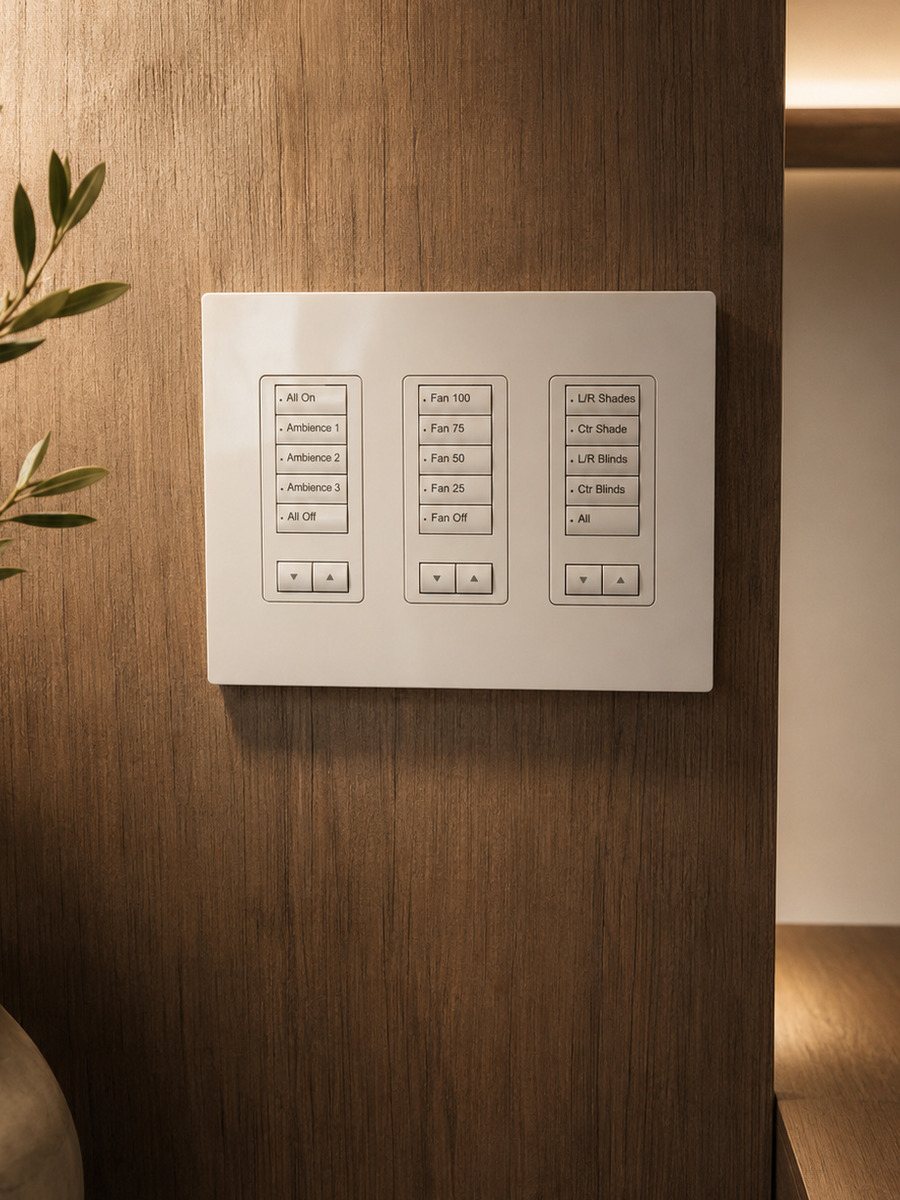
The 2010 ADA Standards for Accessible Design do not mention window treatments at all, so no rule puts the shade control in a particular place. A school will still want it to meet the same operable-parts rules as the light switch beside it: operable with one hand, without tight grasping, pinching or twisting of the wrist, at 5 pounds of force or less (section 309), and within the 15 to 48 inch range of an unobstructed forward reach (section 308). A motorized shade on a wall switch or keypad mounted in that range meets them by design.
The energy claim, with the numbers
You will see "up to 25%" quoted for automated shades. The figure traces to a ComEd test run with Illinois Tech from May 2021 to March 2022: 39 motorized insulating shades against mini blinds in one office in Chicago's Willis Tower, a 1970s building with single-pane windows. On a schedule the shades used 25% less energy in the heating season; in the cooling season the manual and scheduled modes used 25% and 22% less. The figures come from data that were not weather-normalized, and the report carries a notice that it is not technical guidance. That is a heating-climate office behind single glazing, not a Florida school.
In South Florida the lever is solar heat gain, and the colour decides it. Mermet publishes the heat gain improvement over bare glass for an interior shade in a commercial glazing case: 58% for E Screen 3% in White/White, 16% for the same weave in Charcoal/Grey. The white reflects 73% of the sun's energy, the charcoal 10%. That is the classroom trade-off in two numbers: the dark screen that takes the glare off the board does less for the cooling bill, and the white one that cuts the bill shows more glare. Where a room needs both, KOOLBLACK is the compromise, a charcoal that reflects 34% of the sun's energy instead of the 5% of a conventional charcoal. Pick the colour for the problem each facade actually has.
Power and control for a campus
Wired low voltage is the default for a school, because the shades have to work every day without anyone touching them, and nobody wants a battery round across a wing. Lutron Sivoia QS covers 20 in to 20 ft on a wired QS link; Crestron's QMT motors run on Cresnet; Somfy SDN puts every motor on an addressed RS-485 bus. Battery motors belong where power cannot be run: a few windows, not a building. The battery vs wired guide has the detail. Control that gets used is simple: a wall switch per room, a schedule per facade, a presentation scene where there is AV, and a facilities override that can move a floor or a building at once. Phone apps and voice control are optional extras in a school; the schedule and the switch do the work.
What we would skip
- Cord or bead-chain shades in any room a young child uses
- Fabric without an NFPA 701 listing anywhere in a school, and unlisted drapery in a lecture hall
- Blackout without side channels in a room that has to project
- Battery motors across a whole classroom wing
- A white screen on the wall the students face, or a dark one where the problem is heat
- Working on a K-12 campus while students are present without screening or district supervision
- A ceiling closed before the shade power is run
- Fabric chosen from a catalogue photo instead of a sample held to the glass at the problem hour
What it costs
Published planning figures, from the quote engine behind our written quotes: a 72 x 84 in motorized roller shade from about $733 on our Essential tier, $793 on Somfy WireFree, $1,910 on wired Somfy with its power panel and $3,141 on Lutron; eight shades from $6,687 to $16,566 by system. Budgetary and before tax; the full tables are on cost by system and the pricing page. Dual shades, side channels, coupling across wide spans, pockets and the control system move the number, which is why the first step is the room list and a photo of each room at its worst hour.
Frequently asked questions
Do window shades in a Florida school have to be fire rated?
For K-12 classrooms, the Life Safety Code that Florida adopts requires draperies, curtains and similar furnishings in educational occupancies to meet section 10.3.1, which means the NFPA 701 flame test, and a lecture hall or auditorium for 50 or more people is an assembly occupancy with the same requirement. Inspectors differ on whether a roller shade counts as a hanging furnishing, so we specify NFPA 701 listed fabric for every school room and hand over the certificates with the submittals.
Are university classrooms treated the same way?
Not always. Past the twelfth grade a classroom is usually treated as a business occupancy, where that drapery rule does not apply, but a lecture hall for 50 or more people is an assembly occupancy and does require NFPA 701. We specify listed fabric in both, so the answer never depends on the head count.
How dark can a classroom or lecture hall get for a projector?
As dark as the room's other light sources allow. A blackout fabric stops the light through the shade, and side channels close the gaps at its edges, which is where a blackout alone still leaks. On a dual shade the blackout shares a bracket with a 3% screen, so the room goes from daylight to projection and back with one press, or from the AV system's presentation scene.
Can your crew work on a K-12 campus while students are there?
Florida's Jessica Lunsford Act requires background screening for contractors on public school grounds when students are present (sections 1012.465 and 1012.467 of the Florida Statutes), unless they work under the direct supervision of a district employee (section 1012.468). The simple route is to measure after hours and install in the summer, on breaks or on weekends, when students are not permitted on campus and the screening rule does not apply.
Are motorized shades safe in rooms young children use?
They remove the hazard instead of reducing it. The CPSC calls cordless window coverings the only option that eliminates the strangulation hazard, and a motorized shade has no cord, chain or loop to pull. Our child-safe window treatments guide has the details and the regulator's figures.
Do motorized shades meet the ADA?
The 2010 ADA Standards do not mention window treatments. If you want the shade control to meet the same operable-parts rules as the room's light switch (one hand, no tight grasping or twisting, 5 pounds of force or less, 15 to 48 inches above the floor for a forward reach), a motorized shade on a wall switch or keypad in that range does it by design.
Do motorized shades cut a school's energy use?
They can, and in South Florida the fabric colour decides how much. Mermet's published heat gain improvement over bare glass for an interior shade in a commercial glazing case is 58% for E Screen 3% White/White and 16% for Charcoal/Grey. The widely quoted 25% comes from one Chicago office with single-pane windows, measured without weather normalization, so it does not transfer to a Florida classroom.
Battery or wired motors for a school?
Wired low voltage for classrooms, lecture halls and anything that runs as a row: Lutron Sivoia QS, Crestron QMT on Cresnet or Somfy SDN, all on schedules that run without anyone touching them. Battery motors are for the few windows where power cannot be run; across a classroom wing they become a recharging routine nobody budgeted for.
Can the shades tie into the classroom AV and the building system?
Yes. In a lecture hall the shades join the AV system as scenes, so the presentation scene lowers the blackout and dims the lights; across a building they take a schedule per facade and a facilities override that can move a floor or the whole building at once. Where the campus already runs Lutron or Crestron, we work to its standard rather than adding a second system.
How long does a school shade project take?
Fabrication runs three to four weeks from the approved fabric schedule, so a summer installation is planned in the spring: measure after hours, approve the fabric and the room schedule, then install while the campus is empty. A room list and a photo of each room at its worst hour are enough for a budgetary number per opening within days.
Sources
- Rule 69A-60.002, Florida Administrative Code: the Florida Fire Prevention Code, 8th edition, adopting NFPA 101 (Florida 2021 edition) and the notice of proposed rule for the 9th edition (proposed effective date December 31, 2026)
- New Hampshire State Fire Marshal: School Fire and Life Safety Inspection Checklist (NFPA 101-2018, 15.7.4.1) and Pasco County Schools: Fire and Life Safety Procedure Manual
- Rhode Island State Fire Marshal: 2021 code changes, including the wording of 10.3.1
- Nevada State Fire Marshal: educational occupancies (through the twelfth grade; beyond it usually a business occupancy) and Illinois State Fire Marshal: business use under 50 occupants, assembly use at 50 or more
- NFPA Formal Interpretation F.I. 701-99-1 (NFPA 701 and PVC blinds) and Illinois State Fire Marshal: school health and life safety updates (ordinary window shades and decorative materials)
- Florida Statutes 1012.465, 1012.467 and 1012.468, background screening for noninstructional contractors (the Jessica Lunsford Act)
- 2010 ADA Standards for Accessible Design, 36 CFR 1191 Appendix D: 205.1, 308 and 309
- Heschong Mahone Group: Daylighting in Schools, for Pacific Gas and Electric (1999)
- Heschong Mahone Group: Windows and Classrooms, California Energy Commission PIER report P500-03-082-A-7 (2003)
- ComEd Emerging Technologies with Illinois Tech: Commercial Interior Insulated Shades (2022)
- Mermet USA: E Screen grouped spec sheets and E Screen KOOLBLACK spec sheets (solar reflectance, heat gain improvement, UV blockage, noise reduction, NFPA 701, GREENGUARD Gold), summarized on our E Screen page; Phifer's certifications on our SheerWeave page
- UL: GREENGUARD and GREENGUARD Gold certification
- The CPSC on cordless window coverings, with sources, in our child-safe window treatments guide; Lutron fire-rating counts on our Lutron commercial fabrics page
- Pricing: our published cost by system figures, quote engine, September 2026
Send the room list and a photo of the worst hour
We come back with a budgetary number per opening within days, then measure at the problem hour and hold the samples to your glass. One company specifies, sews, installs, programs and services it; start on the commercial page.