
Every Curtain Fiber Compared, from Polyester to Silk
October 4, 2026 · Guides · By David Martineau
Every curtain and drapery fabric is made of one fiber or a blend of several, and the fiber decides how the panel behaves long after the colour is chosen: how it takes the sun, whether it grows and shrinks with the humidity, whether mildew can damage it, how it burns and how it is cleaned. This guide compares every fiber you are likely to find on a drapery label, from polyester, cotton, linen, silk, wool, viscose and rayon to acrylic, lyocell, nylon, spandex, metallic yarn and the fiberglass and vinyl in shade fabric, with real swatches from the libraries we sell. Then it shows what the percentages on a label mean, how to identify a fiber with no label, and which fiber suits which window in South Florida.
The short answer. For a South Florida window, polyester is the fiber that asks the least: the sun weakens it only very gradually without discolouring it, humidity barely moves it, mildew generally does not damage it, most polyester drapery fabric can be washed, and flame-resistant drapery is most often polyester. Linen and cotton give the most natural look but absorb moisture, so they grow and shrink with the humidity, weaken in the sun and can mildew; they are lined and kept off unshaded glass. Silk is the most beautiful and, with nylon, the fiber light weakens most; it is lined, interlined and kept behind a sheer or a solar screen. Wool resists fire on its own but not ultraviolet light. Viscose, which is rayon, brings lustre and drape but is among the least stable in humidity, so it is best blended and lined. Acrylic, especially solution-dyed, takes the sun best of the common drapery fibers. And read the composition line, not the name: in our library, a fabric called Linenhouse is 95% polyester.
On this page: Every fiber at a glance · What a drapery library is made of · Polyester · Cotton · Linen · Silk · Wool · Viscose and rayon · Lyocell, modal and cupro · Acrylic · Nylon, spandex and metallic · Flame-resistant fibers · Shade fabrics · Velvet and other weaves · Blends · Reading a label · The burn test · Which fiber for which window · FAQ
Every curtain fiber at a glance
The sun ratings come from Michigan State University's extension bulletin Fabrics for the Energy-Conscious Home, the textile house James Dunlop's guide to fibers and the textile conservators' reference on light damage; the mildew column from the University of Florida's extension service; the flame column from the burn-test reference of the Museum of Fine Arts, Boston, and the Woolmark Company. "Moves" means the fiber absorbs water from the air, so a panel made of it can grow and shrink as the humidity changes. The last column is our own count of the 279 drapery designs in the Alendel library on this site, explained in the next section.
| Fiber | In the sun | In humidity | Mildew | In a flame | In 279 drapery designs |
|---|---|---|---|---|---|
| Polyester Synthetic | Very gradual strength loss, no discolouration | Non-absorbent: barely moves | Generally not damaged (can discolour) | Hard to ignite, melts into beads; inherently flame-resistant grades exist | In 270 (97%); 178 are all polyester |
| Acrylic Synthetic | Very little strength loss, no discolouration | Non-absorbent: stable | Generally unaffected | Melts, then burns readily | In 13 (5%), mostly decorative blackouts |
| Cotton Plant fiber | Gradual strength loss, gradual yellowing | Absorbent: moves; can shrink | Susceptible | Burns fast; ignites at about 255 °C | In 56 (20%); none is 100% cotton |
| Linen Plant fiber (flax) | Gradual strength loss; needs a lining | Absorbent: grows and shrinks | Susceptible | Burns fast, like cotton | In 42 (15%); one is 100% linen |
| Viscose (rayon) Regenerated cellulose | Weakens faster than cotton; not UV-resistant | Very absorbent: visibly moves | Susceptible | Burns very fast, like paper | In 24 (9%) |
| Silk Animal fiber | Among the most light-sensitive of all fibers | Absorbent: moves | Susceptible | Burns and bubbles, smells of burnt hair | 3 (1%), all 100% silk |
| Wool Animal fiber | Loses strength and fades with long exposure | Elastic: can stretch over time | Susceptible, and moths | Naturally flame-resistant; self-extinguishes | 2 (1%), both blends |
| Nylon Synthetic (polyamide) | Weakens with long exposure; light-sensitive like silk | Stable | Generally unaffected | Shrinks and melts, then burns | None as a drapery fiber |
A few fibers and materials do special jobs rather than make the cloth, and shade fabric is a construction of its own:
| Fiber or material | What it is | What it does in a window fabric | Example on this site |
|---|---|---|---|
| Lyocell | A rayon spun from cellulose in a recyclable solvent | Drape and softness, stronger wet than viscose | Spirit sheer: 50% lyocell |
| Spandex (elastane, Lycra) | A segmented polyurethane | Stretch, in small amounts | Nap blackout: 1% Lycra |
| Metallic yarn and zari | Metal, or metallised polyester film, wound on a core | Glint and embroidery | Myth: 1% metallic; Memento: 8% zari |
| Modacrylic | A cousin of acrylic with less acrylonitrile | Flame resistance: hard to ignite, self-extinguishing | None in our drapery library |
| Acetate | Cellulose acetate | Slight strength loss and little colour loss in the sun | None in our drapery library |
| Fiberglass | Glass fiber, usually coated | The core of many solar screens: does not stretch in heat or humidity | Mermet E Screen: 36% fiberglass |
| Vinyl (PVC) | A coating on fiberglass or polyester yarn | Coats the yarn of many screens; cleans with mild soap and water | Phifer SheerWeave 4000: 75% vinyl on polyester |
| Olefin and TPO | Polypropylene and other olefins | Outdoor fabrics; PVC-free screens | Phifer SheerWeave Infinity2: 100% TPO |
What a drapery library is actually made of: we counted
Guides online describe the fibers one by one. The fabric books show which ones you will actually be choosing from. On October 4, 2026 we read the composition line of every design in the Alendel library on this site: 438 designs, of which Alendel marks 279 for drapery (the rest are multipurpose or upholstery cloths). Of those 279 drapery designs:
Three findings matter more than the shares:
- Fire ratings follow the fiber. Of the 192 drapery designs made only of synthetic fibers, 162 list NFPA 701, the fire test for drapery in public spaces. Of the 87 that contain any cotton, linen, viscose, lyocell, silk or wool, one does, and it is half acrylic.
- So does washability. 175 of the 192 all-synthetic designs (91%) carry Alendel's washable care codes, WA or WA-P. Of the 87 with a natural or cellulosic fiber, 51 do (59%). All three silks carry S: dry clean or a solvent spot clean.
- Names are not content. 27 designs come in a colour called Linen and contain no linen, and the design called Linenhouse is 95% polyester. More on that under reading a label.
The library is not unusual. Polyester was 57% of all fiber produced in the world in 2023, out of a record 124 million tonnes, according to Textile Exchange's Materials Market Report; man-made cellulosics such as viscose and lyocell were 6%. On the shade side, Crestron's fabric information guide lists 40 shade fabrics: polyester (19, some with an acrylic coating or foam back), vinyl-coated fiberglass (12), vinyl on polyester (6), other fiberglass constructions (2) and one PVC-free olefin.
Polyester: the fiber the fabric books are made of
Polyester is a synthetic fiber spun from a long-chain polymer. It does not absorb water, so it holds its size, and it is the fiber the rest of this page gets compared against.
- SunVery gradual loss of strength, no discolouration (Michigan State)
- HumidityNon-absorbent; moves minimally (James Dunlop)
- MildewGenerally not damaged, though it can discolour (University of Florida)
- FlameDifficult to ignite and self-extinguishing in the burn test; inherently flame-resistant grades exist
James Dunlop rates polyester's durability, abrasion resistance and resistance to ultraviolet light as "generally very good", with very good wrinkle recovery. Graber calls it the most versatile of all drapery materials, and the library shows why: polyester is woven as voiles, velvets, embroideries, decorative blackouts and slubbed weaves that read as linen. Its weak points are few. Graber notes that light colours can show stains more easily, and a polyester melts rather than chars, so ordinary polyester is not automatically fire-rated: look for NFPA 701 on the specification, or an inherently flame-resistant grade (see flame-resistant fibers).
Recycled polyester is spun from recycled PET instead of new polymer and is used the same way. It was 12.5% of the world's polyester in 2023 (Textile Exchange), and it is in 67 of the 279 Alendel drapery designs, from the Hercules sheer to the Fade blackout. Microfiber is fiber spun finer than one denier; James Dunlop describes it as exceptionally soft and hard for moisture and stains to penetrate.
In a South Florida house, and above all one closed up for part of the year, polyester is the safe default: it holds its size, shrugs off mildew and goes through a wash. It is the fiber for west and ocean-facing glass, kitchens and pool houses, and any panel that will be washed. When the look you want is linen, a linen-look polyester or a polyester-rich blend gets most of the way there; our linen guide compares real linen, blends and linen-look side by side.
Cotton: soft, strong, and thirsty
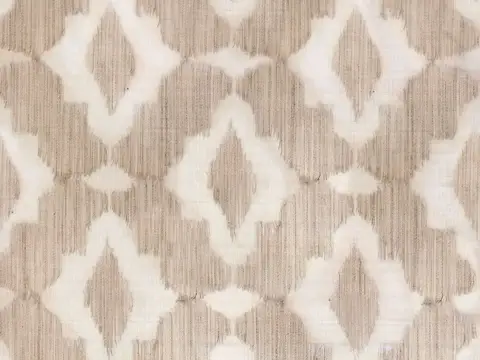
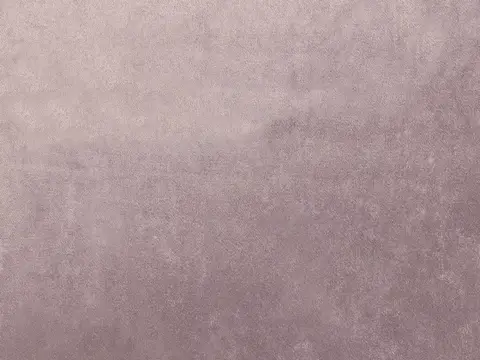
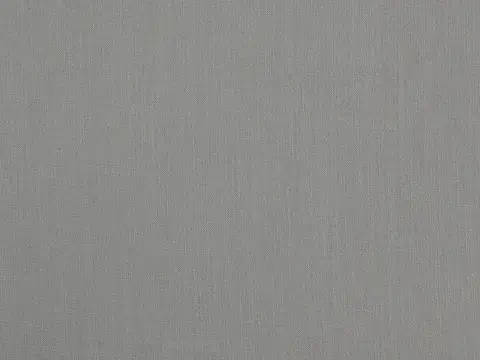
Cotton is the seed fiber of the cotton plant. It is soft, breathable and takes dye and print beautifully, and Graber calls it the workhorse of drapery: it can make anything from a graceful sheer to a stiff, opaque cloth.
- SunGradual loss of strength and gradual yellowing (Michigan State); line it as a drapery (James Dunlop)
- HumidityAbsorbent; may shrink in laundering, which sanforising reduces (James Dunlop)
- MildewSusceptible (University of Florida)
- FlameBurns fast with a bright yellow flame; ignites at about 255 °C (MFA Boston, Woolmark)
Cotton has good natural durability and is even stronger wet, according to James Dunlop, which also recommends protecting it with a quality lining when it is used as a drapery. In the trade library it appears mostly in prints and in blends: none of the 279 Alendel drapery designs is 100% cotton, and the 100% cottons are multipurpose prints and solids such as Origin, Vista and Banff. Cotton is also the classic lining fiber; our lining guide compares cotton, poly-cotton and polyester linings in sun and humidity.
Where it works: a lined panel in a room where the air conditioning runs all year. Where we would not use it on its own: unshaded west glass, or a house that sits closed and humid through the summer.
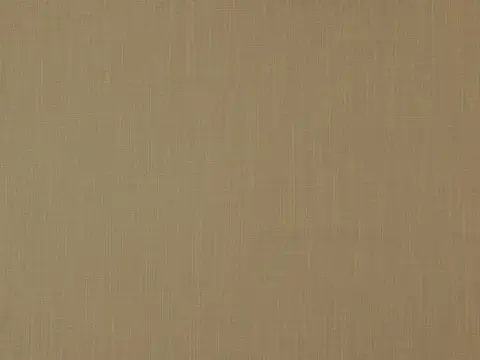
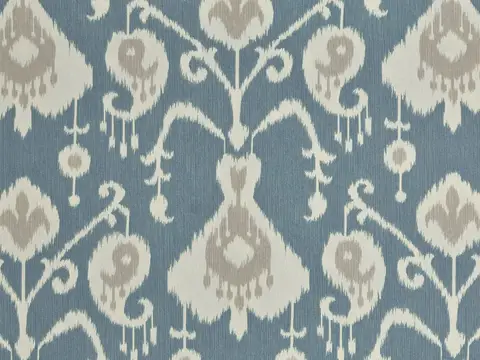
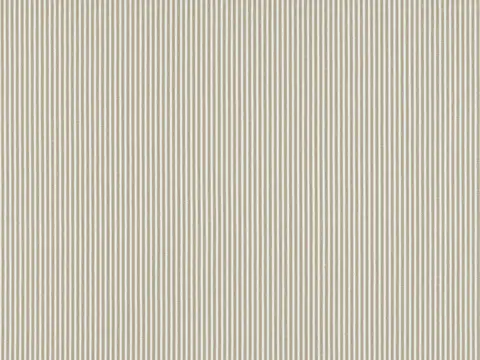
Linen: the strongest natural fiber, and the one that moves
Linen is the stem fiber of the flax plant. James Dunlop calls it the strongest natural fibre and a luxury fiber; it has a dry, cool hand and the irregular slub that every linen-look weave tries to copy.
- SunGradual loss of strength (Michigan State); moderately UV-resistant, needs a quality lining as a drapery (James Dunlop)
- HumidityHighly absorbent: a 100% linen panel grows in wet weather and draws back in dry air
- MildewSusceptible (University of Florida, James Dunlop)
- FlameBurns fast with a bright yellow flame, like cotton (MFA Boston)
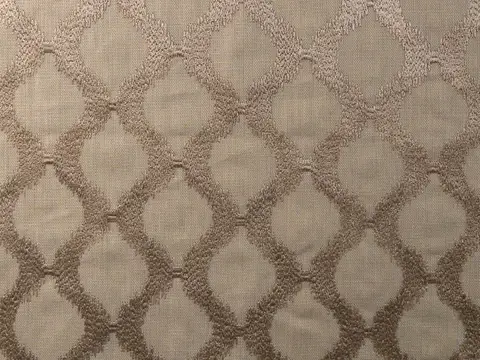
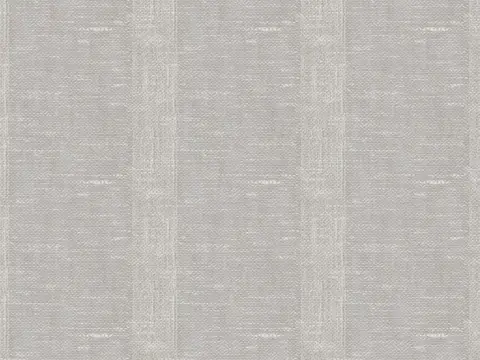
Linen crinkles when it meets moisture (The Shade Store) and develops folds and wrinkles over time (Graber), which is half of its charm. It is also rarer in the books than it looks: 42 of the 279 Alendel drapery designs contain linen, and only one, Harvest Linen, is 100% linen; the rest are blends from 5% to 80% linen. Because 100% linen moves with the weather, we cut it to the shortest measurement of the opening and steam it in place, so it kisses the floor instead of breaking on it, and on a west or ocean-facing wall we line it or put a solar screen behind it to do the sun work. The linen drapery guide has the full story, from the flax harvest to what linen costs.
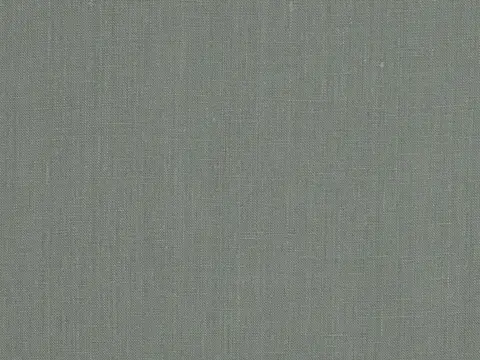
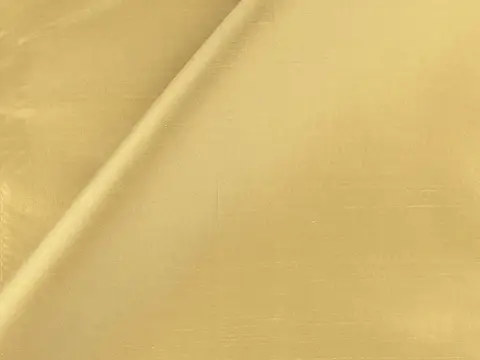
Silk: the most beautiful, and the most fragile in the sun
Silk is a protein fiber spun by the silkworm. James Dunlop describes it as naturally fine in texture and taking colour beautifully, and nothing else has its lustre.
- SunSilk and nylon are the fibers light weakens most (conservation reference); Michigan State rates silk worse than cotton
- HumidityAbsorbent; moves in humid conditions (James Dunlop)
- MildewSusceptible (University of Florida)
- FlameBurns and bubbles, smells of burnt hair, leaves brittle beads (MFA Boston)
Light damage to textiles is cumulative and irreversible, in the words of the textile conservators' reference, so a silk panel at a sunny window does not recover. James Dunlop is blunt: silk is sensitive to direct and reflected ultraviolet light and should not be used in direct or bright sunlight. On the water, reflected light counts. That does not rule silk out; it decides how silk is made up. Wikipedia's entry on dupioni, a slubbed silk, notes that a curtain or drape made of it needs a substantial UV-stable underlining. Our rule is the same: silk is lined and interlined and kept off unshaded glass, ideally behind a sheer or a solar shade that takes the sun first.
All three silks in the Alendel library on this site are 100% silk made in India, 54 in wide, between 0.28 and 0.41 lb per yard, and dry clean only: Shalimar (51 colours), Shelby (53) and Spago (24). If you love the look but the window is hot, the composition line of a "faux silk" tells you how it will behave: a polyester faux silk takes the sun like polyester, a viscose one like viscose.
Wool: naturally flame-resistant, but not sun-resistant
Wool is the fleece fiber of sheep, a protein fiber like silk. It is the natural fiber that resists fire on its own.
- SunLoss of strength and gradual fading with prolonged exposure (Michigan State); pure wool is unsuitable for curtains unless protected (James Dunlop)
- HumidityElastic; 100% wool can stretch over time (The Shade Store)
- MildewSusceptible, and attractive to moth larvae (James Dunlop)
- FlameIgnites at 570 to 600 °C against 255 °C for cotton; does not melt or drip; self-extinguishes (Woolmark)
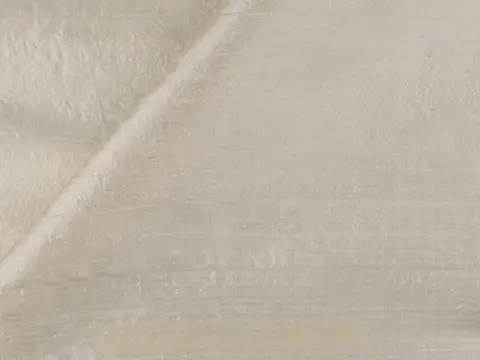
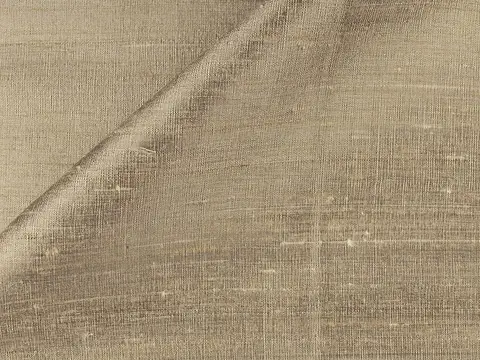
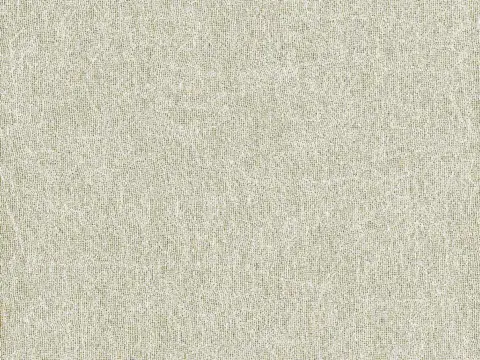
The Woolmark Company's figures explain wool's reputation: it needs 25.2% oxygen to burn when the air holds about 21%, so a flame struggles to keep going, and if it does ignite it puts itself out once the flame is removed. James Dunlop adds that wool is dirt-repellent, anti-static and temperature-regulating. The catch is the sun. James Dunlop does not consider pure wool suitable for curtains unless it is protected from direct sunlight, and notes that blending it with synthetic fibers can reduce that sensitivity. That is what the library holds: wool appears in two Alendel sheers, Spirit (21% wool) and Hypnotize (19%), both blended with lyocell and polyester.
Viscose and rayon: what viscose fabric is, and why it moves
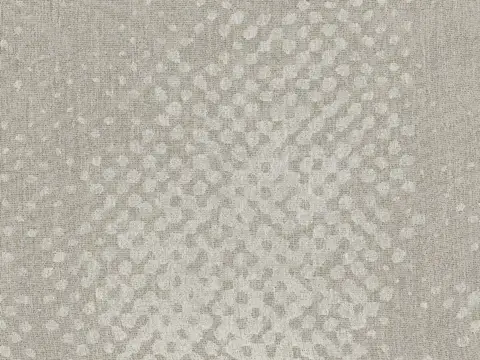
What is viscose fabric? Viscose is rayon: a fiber made by dissolving cellulose, usually from wood pulp, and regenerating it as a fiber. The FTC defines rayon as a manufactured fiber of regenerated cellulose; viscose is the most common process for making it and the name used internationally, and the FTC accepts "viscose" on a US label in place of "rayon". So viscose versus rayon is a question of naming, not of fiber. Modal, lyocell and cupro are rayons too, made by different processes (next section).
- SunGradual loss of strength, affected more than cotton (Michigan State); not UV-resistant, must be lined as a drapery (James Dunlop)
- HumidityVery absorbent; movement is apparent when viscose is the warp yarn (James Dunlop)
- MildewSusceptible (University of Florida, James Dunlop)
- FlameBurns very fast with a bright flame, like paper; leaves a light ash (MFA Boston)
Viscose is loved for its soft hand and lustre (James Dunlop), and Graber describes rayon as having properties of both silk and linen and viscose as a durable alternative to silk. It is also among the least stable fibers in this guide when the air is humid (James Dunlop calls it very absorbent), and it is weak when wet: Seamwork puts ordinary viscose at about half its strength wet. James Dunlop notes that blending viscose with stable fibers minimises its movement. In the library, 24 of the 279 drapery designs contain viscose and every one of them is a blend, such as the 81% viscose Italian sheers Tribal and Organic; among the multipurpose cloths, viscose adds the sheen to polyester velvets such as Lucca.
Rayon vs polyester, then, comes down to drape against stability: rayon drapes and glows like a natural fiber and moves like one; polyester holds its size and shrugs off mildew. Viscose vs polyester is the same comparison under another name.
Is bamboo fabric natural? Almost never, in the form you can buy: the FTC says most bamboo textiles, if not all, are really rayon. It requires bamboo that has been processed into rayon to be labelled rayon, or "rayon made from bamboo", because the chemical process leaves no trace of the original plant, and claims that the fiber keeps bamboo's natural antimicrobial properties need competent and reliable evidence.
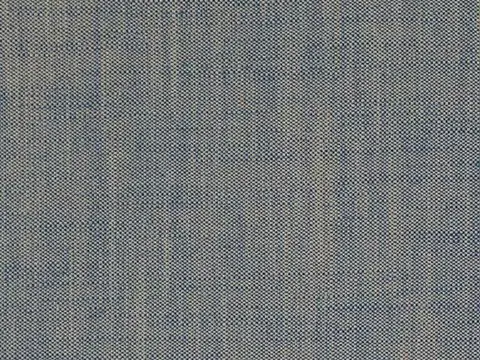
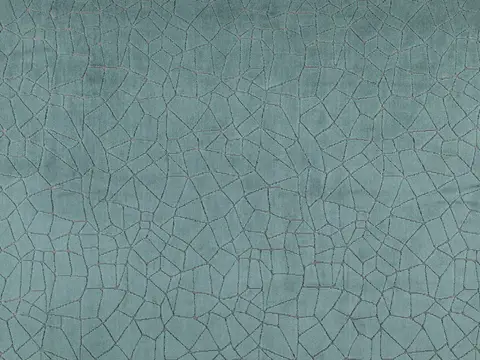
Lyocell, modal and cupro: the other rayons
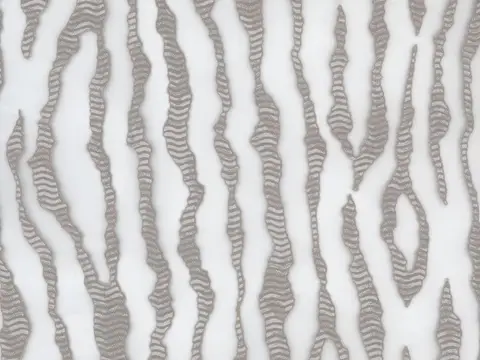
- Lyocell (TENCEL is Lenzing's brand) is cellulose dissolved in a solvent and spun without chemically changing it; the FTC allows the name lyocell for exactly that. Seamwork reports that it keeps about 85% of its strength wet, against about 50% for viscose, with a smoother face and a more luxurious drape; it also notes that lyocell can wrinkle a lot. In our library it is the base of the two wool-blend sheers, Spirit and Hypnotize.
- Modal is viscose rayon stretched as it is made, a name Lenzing trademarked that has become generic. These high-wet-modulus rayons are dimensionally stable and do not shrink or get pulled out of shape when wet the way many rayons do (Wikipedia). It is mostly an apparel and bedding fiber.
- Cupro, sold as Bemberg, is a rayon made from cellulose dissolved in a copper-ammonia solution, spun in fine filaments for suit linings and light summer clothes (Wikipedia).
Acrylic: the drapery fiber that takes the sun best
Acrylic is a synthetic fiber made at least 85% of acrylonitrile, in the FTC's definition. Graber notes it can imitate wool or be made tight enough to withstand outdoor use; in Alendel's books it often appears as "polyacrylic", which is the same fiber.
- SunVery little loss of strength, no discolouration (Michigan State); excellent UV resistance (James Dunlop)
- HumidityNon-absorbent, strong and stable (James Dunlop)
- MildewGenerally not affected (James Dunlop)
- FlameMelts in the heat and burns readily with a smoky flame (MFA Boston)
The weak point James Dunlop's guide names is pilling; the same guide notes that Dralon, a durable acrylic yarn, has long been used for velvets. Solution-dyed acrylic is the version built for the sun: the colour is added to the liquid polymer before it is spun, so it runs all the way through the fiber instead of sitting on its surface (Pindler). Outdoor performance fabric such as Sunbrella is acrylic too (The Shade Store). In the drapery library, 13 designs contain acrylic: decorative blackouts such as Fade and Absence that pair it with polyester and list NFPA 701, and sheers such as Opaque, which is 100% acrylic.
Acrylic vs polyester at a window: both are stable and generally unaffected by mildew; acrylic has the edge in strong sun, polyester in abrasion and wrinkle recovery, and the acrylic decorative blackouts in the library use both.
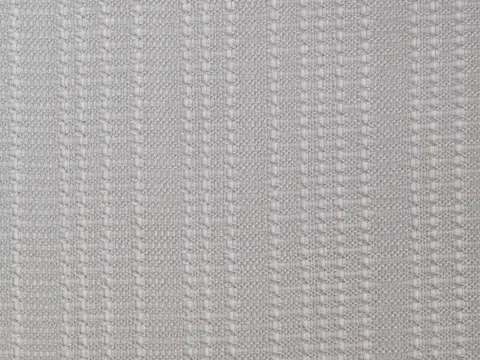
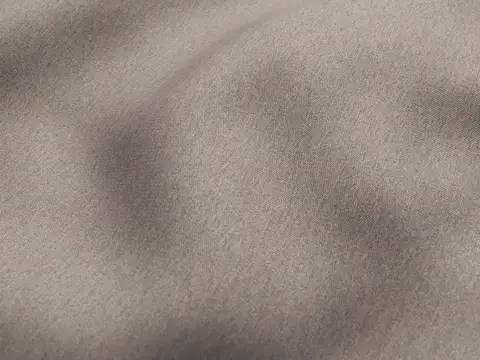
Nylon, spandex and metallic yarn: the small percentages
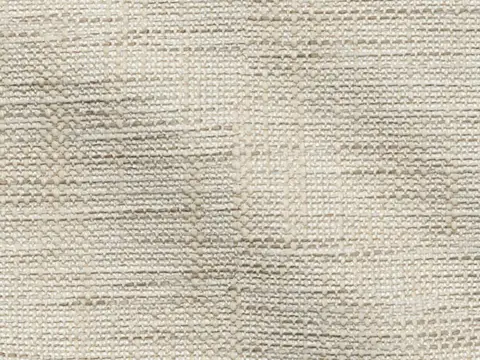
Some fibers show up on a label at 1% to 10% because they do a specific job.
- Nylon (polyamide in ISO terms) is a very strong, stable fiber that is often blended in to make upholstery more durable; James Dunlop warns that long exposure to ultraviolet light weakens it over time, and the conservators' reference puts it with silk as the fiber light weakens most. None of the 279 drapery designs contains nylon; it appears in multipurpose cloths such as Touch (8% polyamide). Polyester vs nylon at a window is an easy call: polyester.
- Spandex, called elastane in ISO terms and sold as Lycra, is a segmented polyurethane added for stretch. It is the FTC's own example of a fiber that may be named on a label at under 5% because it has a function at that amount. Nap, a decorative blackout, is 99% polyester and 1% Lycra.
- Metallic yarn and zari add glint. Zari was traditionally thread of fine gold or silver; modern metallic zari replaces the metal with slit metallised polyester film wound around a core yarn, which is lighter, more durable and does not tarnish (Wikipedia). Myth is a sheer with 1% metallic yarn; Memento is an embroidered cloth with 8% zari.
Flame-resistant fibers: inherent versus treated
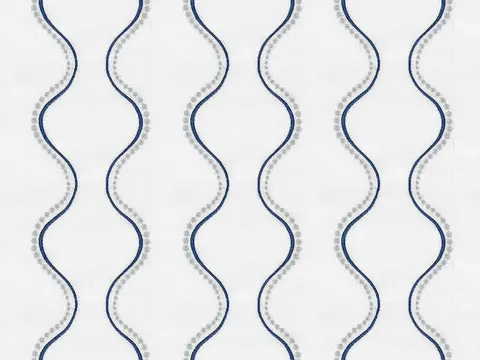
For hotels, offices, common areas and other public spaces, drapery generally has to pass NFPA 701 (our lining guide traces the code path). There are two ways to get there, and they age differently. A treated fabric has a flame-retardant finish added to it, and that finish can dissipate over time, especially with repeated cleaning, which is why topically treated drapery should be re-tested every year and re-treated as needed. An inherently flame-resistant fabric has the property in the fiber itself, for the life of the fabric, and can be cleaned as its maker recommends (Wikipedia, fire-retardant fabric).
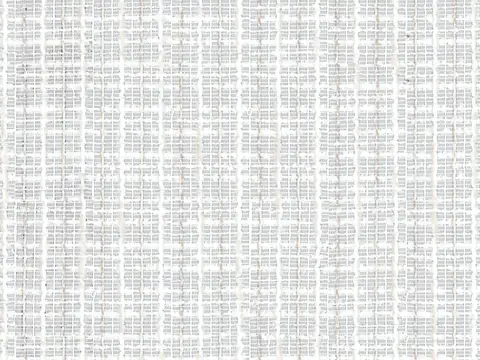
- Inherently flame-resistant polyester. Trevira CS is the best-known: the flame retardancy is built into the fibers and yarns, where external influences cannot affect it (Showtex). On a label, a trademark like Trevira CS has to appear next to the generic fiber name, equally conspicuous (FTC). In our library, Impala is a 100% inherently flame-retardant polyester sheer listed to NFPA 701.
- Modacrylic. A cousin of acrylic with between 35% and 85% acrylonitrile (FTC); its fibers are difficult to ignite and self-extinguish, which suits it to furnishings and draperies (Wikipedia).
- Wool. Naturally flame-resistant, as above, though not sun-resistant.
The library count says the rest: 162 of the 192 all-synthetic drapery designs list NFPA 701, against one of the 87 with a natural or cellulosic fiber. For a hotel or branded residence or a commercial space, start with the fire listing, then choose the look.
Shade fabrics: fiberglass, vinyl and PVC-free polyester
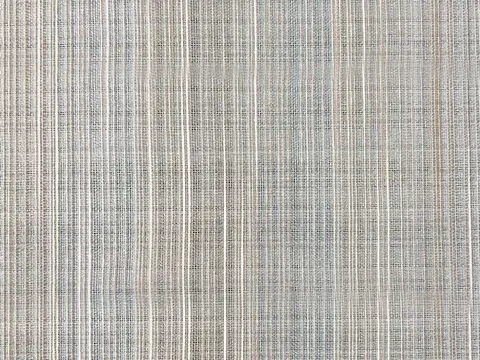
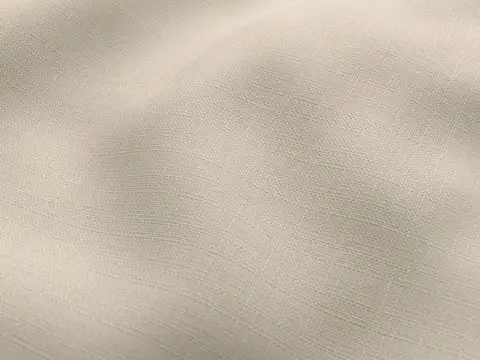
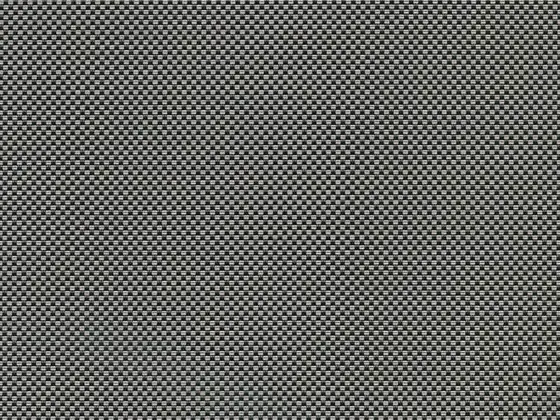
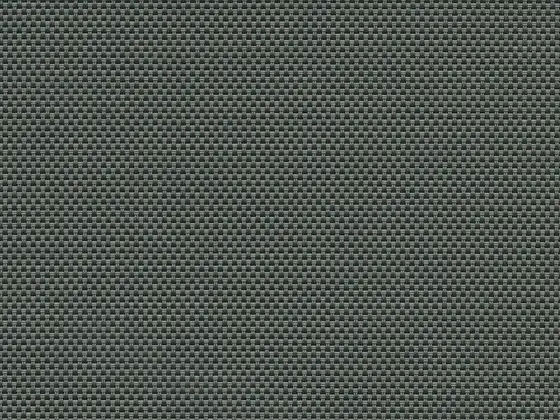
Roller and solar shade fabric is built differently from drapery: a core yarn, usually coated, woven into a cloth that has to hang flat and roll tight on a tube. The core decides how it behaves. Fiberglass does not stretch when it gets hot or humid, which is why the vinyl-coated fiberglass screens we hang on wide, sun-facing glass stay flat year after year; a polyester core is lighter on the tube (our solar screen fabric guide has the detail). For projects that want no PVC, there are screens without it: Phifer SheerWeave 8000 is 100% polyester with no vinyl in the yarn or the coating, and SheerWeave Infinity2 is 100% TPO, a thermoplastic olefin. The compositions are on the shade fabric pages, and the fabric pages of the Crestron library print the same line for each fabric.
Velvet, voile, chenille: weaves, not fibers
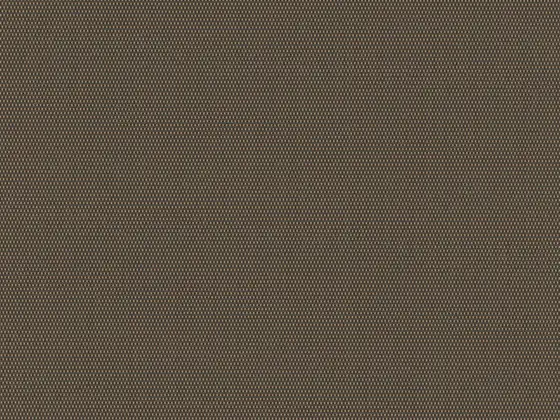
Many fabric names describe how a cloth is made, not what it is made of. Velvet is a woven fabric with a dense, even pile, and Wikipedia lists silk, linen, cotton, wool, mohair, polyester, nylon, viscose and acetate among the fibers it can be made of. The library proves the point: of the 19 velvets in the Alendel library on this site, 11 are 100% polyester, 7 blend polyester with viscose or cotton, and one, Venetian, is 71% viscose and 29% cotton. They look alike on the bolt and behave like their fibers on the window. Voile, chenille and jacquard likewise name a construction. Dupioni is the exception that proves the rule: the word names a crisp plain-weave silk with uneven weft yarn reeled from entangled cocoons (Wikipedia), so a cloth sold as faux dupioni copies the look in another fiber, and the composition line says which. Whatever the name, the composition line decides how the fabric will live.
Blends: why most drapery fabric is a mix
A blend borrows a strength from one fiber to cover a weakness of another, and the shares on the label tell you which fiber leads. The useful ones:
- Polyester steadies linen. Polyester is non-absorbent (James Dunlop), so a linen-polyester blend moves less with humidity than 100% linen, which is why we choose a blend where a room is humid or a panel must hold an exact length.
- Viscose needs a partner. Blending viscose with stable fibers minimises its movement (James Dunlop); every viscose drapery design in the library is a blend, with polyester, linen or cotton.
- Wool is blended for the sun. Synthetic fibers can reduce pure wool's sensitivity to ultraviolet light (James Dunlop).
- Linen and nylon for wear. James Dunlop rates linen blended with up to 10% nylon as very durable in upholstery.
Read the percentages, not the marketing word. Two sheers that both contain linen can be 90% polyester and 10% linen, like Alendel's Monaco 118, or 58% linen, like Canopy; they look related and behave differently.
How to read a fiber content label
Curtains and draperies are covered by the US Textile Fiber Products Identification Act, so a label has to follow the FTC's rules (FTC: Threading Your Way Through the Labeling Requirements):
- Generic names, by weight, in order. Each fiber is listed by its generic name and percentage of the fiber weight, largest first.
- Under 5% is "other fiber". A fiber under 5% is normally disclosed as "other fiber", unless it has a definite function at that amount; the FTC's example is spandex for stretch.
- A 3% tolerance on blends. A label that says 40% cotton may be anywhere from 37% to 43%; a label that says 100% gets no tolerance.
- International names are allowed. Viscose for rayon and elastane for spandex both satisfy the rule.
- Trademarks sit beside the generic name. TENCEL lyocell, Trevira CS polyester or Lycra spandex, in lettering of the same size.
- Bamboo is rayon. See above.
Two habits of the trade are worth knowing. Mill and distributor specifications often list every fiber to the percent, so you will see 1% Lycra or 1% metallic yarn on a spec sheet. And pattern and colour names are not fiber content: Linenhouse is 95% polyester, 27 Alendel designs come in a colour called Linen without any linen, Spirit in Linen is lyocell, polyester and wool, and Banff in the colour Jute is 100% cotton. The design pages in our Alendel library print the composition, the care code and the fire listings beside the swatches, so you can check before you fall in love.
No label? The burn test
Textile people identify an unknown fiber by how a snippet burns. The table follows the burn-test reference of the Museum of Fine Arts, Boston. Use a loose thread or a small cutting held with tweezers over a sink or a fireproof dish, never a hanging panel. The test is meant for a single fiber: a blend gives a mixed result, and a flame-retardant finish changes everything.
| Fiber | In the flame | Smell | What is left |
|---|---|---|---|
| Cotton | Burns very fast with a bright yellow flame and keeps burning | Burnt paper | Bushy ends, powdery to the touch |
| Linen | Burns very fast with a bright yellow flame and keeps burning | Burnt paper | Ends melted together, powdery to the touch |
| Viscose, rayon | Burns very fast with a bright yellow flame, like paper | Burnt paper | A light, white ash |
| Wool | Burns slowly and bubbles; the flame is easy to put out | Burnt hair, strong | Black, brittle, irregular beads |
| Silk | Burns and bubbles faster than wool with a yellow flame | Burnt hair, mild | Black, brittle, round beads |
| Acetate | Burns fast; may melt and sputter | Burnt paper, slight vinegar | Hard black beads |
| Nylon | Shrinks and melts first, then ignites and burns rapidly | Burnt plastic | A hard solid once cool |
| Polyester | Difficult to ignite, self-extinguishing; a shiny, sooty flame | Sweet, aromatic | Hard, dark beads |
| Acrylic | Melts in the heat alone, then burns readily with a smoky flame | Acidic, sometimes fishy | Hard ash |
Which fiber for which window in South Florida
Sun, humidity and salt air are the three things a South Florida drapery lives with. The University of Florida's extension service warns that high humidity in a warm climate encourages mold and mildew, that cellulose fibers (cotton, linen, rayon) and protein fibers (wool, silk) are the most susceptible, and recommends keeping indoor air at 30% to 50% humidity and 60 to 80 °F, which a lived-in, air-conditioned house manages and a house closed up for the summer may not. Every drapery we sew is lined, whatever the fiber; the table is about the face fabric.
| The window or the room | The fiber we reach for | Why |
|---|---|---|
| West or ocean-facing glass, no screen behind | Polyester, acrylic, or a polyester-rich blend | The least affected by sun; colour holds |
| The same window, but you want linen or silk | Linen lined, silk lined and interlined, with a solar screen behind | The screen does the sun work; the natural fiber does the softness |
| A seasonal home closed up for the summer | Polyester or a polyester-rich blend | Mildew damages cellulose and protein fibers most; synthetics are generally not damaged |
| A wall of glass dressed in sheers | A wide-width polyester or linen-blend sheer; 100% linen for the most natural look | 194 of the 279 drapery designs are 110 in wide or more, made for tall glass; linen is cut to kiss the floor |
| Bedroom or media room | Any face fabric, with a blackout lining | The lining makes the dark; see the lining guide |
| Kitchen, bath, children's rooms | Polyester with a washable code (WA or WA-P) | 91% of the all-synthetic drapery designs carry one |
| Hotel, office, condo common area | Inherently flame-resistant polyester listed to NFPA 701 | The rating lasts the life of the fabric; treated finishes can wash out |
| Loggia, pool house, outdoor room | Solution-dyed acrylic or olefin outdoor fabric | Colour through the fiber; mildew-resistant |
| Formal living or dining room | Silk or a silk-look, lined and interlined, behind a sheer | Silk is among the fibers light weakens most |
For more on fabrics that survive the coast, see custom draperies for coastal living; for keeping them clean once they are up, see how to clean shades and drapery.
Frequently asked questions
What is the best fabric for curtains?
For most South Florida windows, polyester or a polyester-rich blend: sunlight weakens polyester only very gradually without discolouring it, it barely moves with humidity, mildew generally does not damage it, and most polyester drapery fabric is washable. Linen, cotton and silk are the choice for the most natural look, made up with a lining (silk also interlined) and kept off unshaded glass. In the 279 drapery designs of the Alendel library on our site, 97% contain polyester.
Is polyester or cotton better for curtains?
Polyester is more stable: it is non-absorbent, so it holds its size in humidity, mildew generally does not damage it, and sunlight weakens it only very gradually. Cotton is softer and takes print beautifully but absorbs moisture, can shrink in laundering (sanforising reduces it), yellows and weakens gradually in the sun, and is susceptible to mildew. Cotton works lined, in a room where the air conditioning runs all year; polyester is the safer choice on sunny or humid windows.
Linen or polyester curtains: which lasts longer?
Polyester, on a sunny or humid window. Linen is the strongest natural fiber but it absorbs moisture, so a 100% linen panel grows in wet weather and draws back in dry air, and it loses strength gradually in the sun and can mildew. Linen lasts well lined, cut to kiss the floor and kept out of direct sun; a linen-polyester blend or a linen-look polyester gives most of the look with far less movement.
Is viscose the same as rayon?
Yes. Rayon is the US generic name for fibers of regenerated cellulose, usually from wood pulp, and viscose is both the most common process for making it and the international name; the FTC accepts either on a label. Modal, lyocell and cupro are rayons made by other processes.
Rayon vs polyester: which is better for drapery?
Rayon, or viscose, drapes and glows like a natural fiber, but it is very absorbent, moves with humidity, weakens faster than cotton in the sun and is susceptible to mildew, so it should be lined and is best blended with a stable fiber. Polyester holds its size, resists mildew and sun, and is usually washable. Many drapery fabrics blend the two to get the lustre of one and the stability of the other.
Is bamboo fabric natural?
Almost never. The FTC says most bamboo textiles, if not all, are really rayon, and it requires bamboo processed into rayon to be labelled rayon or "rayon made from bamboo", because the chemical process leaves no trace of the plant in the finished fiber.
Do silk curtains fade or rot in the sun?
Yes. Silk is, with nylon, the fiber light weakens most: it loses strength and becomes brittle, its dyes fade, and the damage is cumulative and irreversible. Silk drapery should be lined and interlined, kept off unshaded glass, and ideally have a sheer or a solar shade in front of the sun. On the water, reflected light counts too.
Are wool curtains fire resistant?
Wool is naturally flame-resistant: according to the Woolmark Company it ignites only at 570 to 600 °C, against 255 °C for cotton, needs more oxygen to burn than the air contains, does not melt or drip, and self-extinguishes once the flame is removed. It is not sun-resistant, so for curtains it is best blended with synthetic fibers or kept out of direct sun.
What does inherently flame retardant mean?
The flame resistance is built into the fiber itself, as in Trevira CS polyester or modacrylic, so it lasts the life of the fabric and cannot be washed out. A treated fabric has a flame-retardant finish added afterwards, which can dissipate with repeated cleaning and should be re-tested every year. Both can pass NFPA 701, the test for drapery in public spaces.
Which curtain fabrics resist mildew?
Synthetic fibers: polyester, acrylic, nylon and olefin. Mold can grow on and discolour them, but according to the University of Florida's extension service it generally does not damage them, while cellulose fibers (cotton, linen, rayon) and protein fibers (wool, silk) are the most susceptible to both discolouration and damage. Keeping indoor humidity at 30% to 50%, as the University of Florida recommends, helps protect every fiber.
Which curtain fabrics will not shrink or stretch?
The non-absorbent synthetics: polyester and acrylic hold their size in humidity. Cotton can shrink in laundering (sanforising reduces it), linen and viscose grow and shrink with the humidity, and wool can stretch over time. In shade fabric, a fiberglass core is the most stable: it does not stretch when it gets hot or humid.
Is velvet a fiber?
No. Velvet is a weave with a dense, even pile, and it can be made of silk, cotton, linen, wool, mohair, polyester, nylon, viscose, acetate or blends. Of the 19 velvets in the Alendel library on our site, 11 are 100% polyester; the composition line, not the word velvet, tells you how it will behave.
What does "other fiber" mean on a fabric label?
Under the FTC's rules, any fiber that makes up less than 5% of the fiber weight is normally listed as "other fiber" rather than by name, unless it has a definite function at that amount, such as spandex for stretch. Fibers are listed by generic name in order of weight, and on a blend the stated percentages may vary by up to 3 points; a label that says 100% gets no tolerance.
What is lyocell, or TENCEL?
Lyocell is a rayon made by dissolving cellulose in a recyclable solvent and spinning it without chemically changing it; TENCEL is Lenzing's brand of it. It is stronger wet than ordinary viscose, keeping about 85% of its strength against about 50%, and it drapes beautifully, though it can wrinkle. It is the base fiber of the two wool-blend sheers in our Alendel library.
Sources
- Michigan State University Cooperative Extension Service: Fabrics for the Energy-Conscious Home, bulletin E-1772, table 1 (fiber resistance to sunlight and heat, absorbency)
- James Dunlop Textiles: textile fibres (silk, cotton, linen, viscose, wool, acrylic, nylon, polyester, olefin, Trevira CS, Dralon, microfibre)
- University of Florida IFAS Extension: Environmental and Chemical Effects on Home Furnishings (mildew by fiber; 30% to 50% humidity, 60 to 80 °F)
- AIC Textile Specialty Group, Conservation Wiki: environmental concerns for textiles, light (silk and nylon most susceptible; damage cumulative and irreversible)
- CAMEO, Museum of Fine Arts, Boston: fiber burn test
- The Woolmark Company: wool is fire resistant (ignition temperature, limiting oxygen index, no melt or drip)
- Federal Trade Commission: Threading Your Way Through the Labeling Requirements Under the Textile and Wool Acts
- 16 CFR 303.7: generic names and definitions for manufactured fibers (rayon and lyocell, acrylic, modacrylic, nylon, polyester, olefin, glass, acetate, spandex)
- Federal Trade Commission: How to avoid bamboozling your customers (bamboo textiles are rayon)
- Textile Exchange: 2024 Materials Market Report (124 million tonnes in 2023; polyester 57%; recycled polyester 12.5%; man-made cellulosics 6%)
- Showtex: what is Trevira CS (inherently flame retardant fibres and yarns)
- Wikipedia: fire-retardant fabric (inherent versus topically treated drapery)
- Wikipedia: modacrylic
- Wikipedia: rayon (viscose, modal, lyocell, cupro)
- Wikipedia: modal and cupro
- Seamwork: all about lyocell and TENCEL (wet strength against viscose, drape, wrinkling)
- Wikipedia: velvet, dupioni and zari
- Pindler: outdoor fabrics (solution-dyed acrylic, polypropylene, polyester)
- Graber: the best fabric for curtains and drapery
- The Shade Store: how to choose the best fabric for Roman shades (linen, wool, silk, Sunbrella acrylic)
- Our own count: Alendel's published composition, care code and fire listings for the 438 designs in the Alendel library on this site, read October 4, 2026; Crestron's fabric information guide for the 40 shade fabric families in the Crestron library.
We bring the swatch books to the house, so you can hold the fiber in your own light before anything is cut. You can also request samples online.
Fabric on your windows, cut to your room
We bring the swatch books to the house so you can feel every fiber in your own light, measure the hardware before the fabric, and sew the panels in our own Fort Lauderdale workroom. Book a private, complimentary consultation, or start with the free guide: the 5 costly mistakes.